Key Takeaways
-
Most resolutions fail because they focus on what you want to change, not how you’ll build habits that last.
-
Small, repeatable routines — like meal planning, leftover check-ins, and proper storage — make reducing food waste easier and more consistent.
-
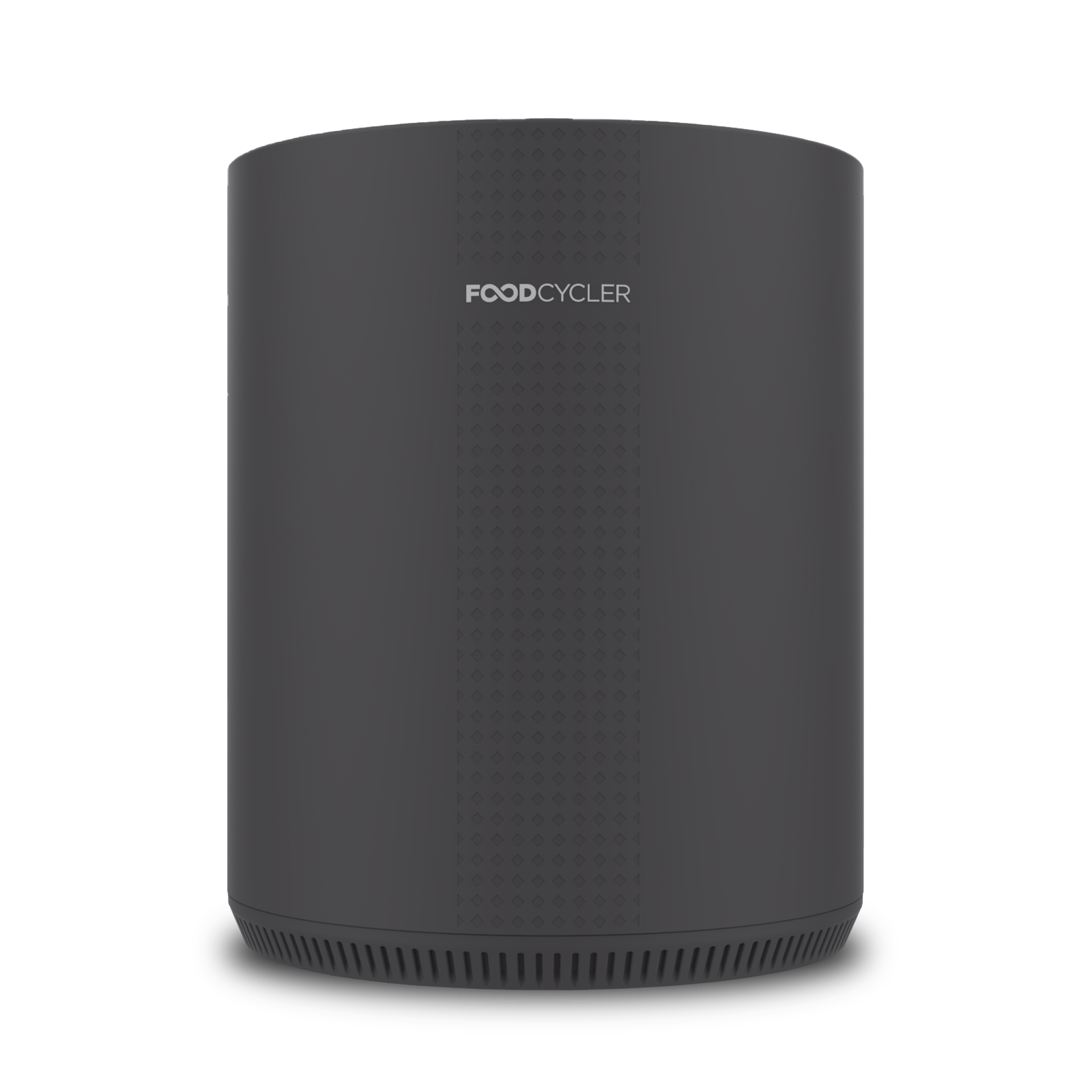
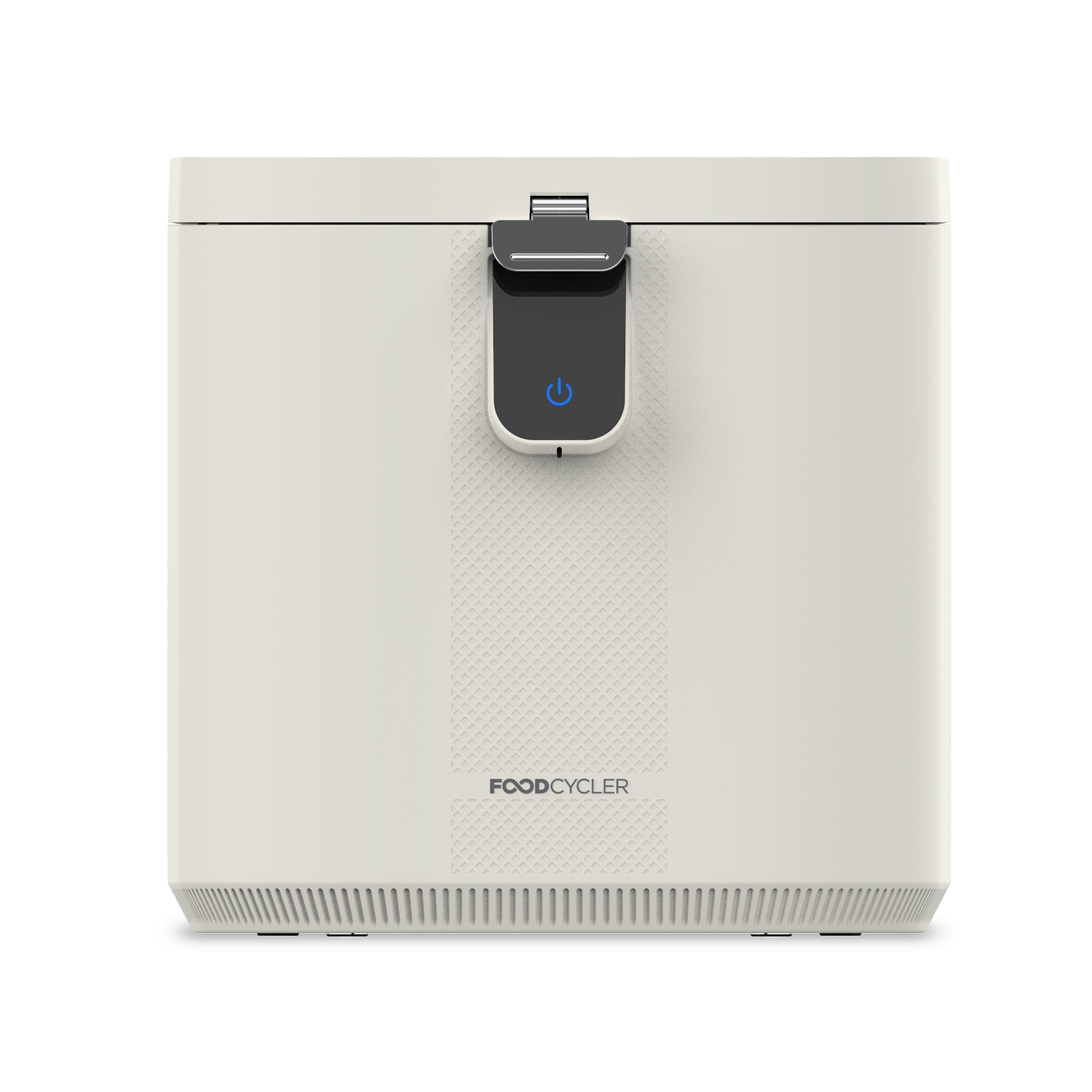
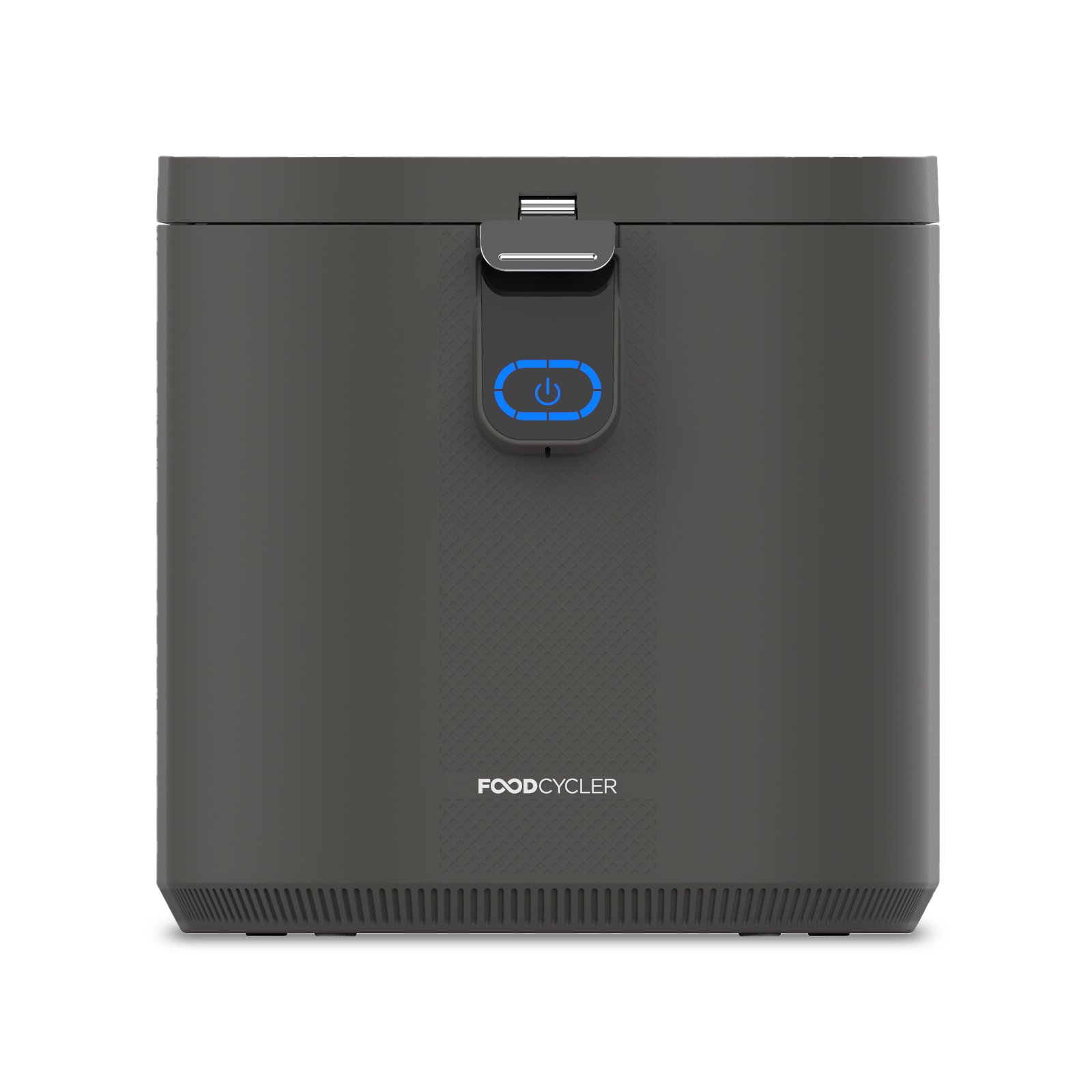
Using a FoodCycler turns everyday scraps into something useful, helping you cut down trash, kitchen smell, and overall waste effortlessly.
-
Reducing food waste at home can save you money week after week — fewer spoiled groceries, fewer garbage bags, and a fresher kitchen routine.
-
You can jump-start better kitchen habits with our free 7-Day Food Waste Kickstart printable, designed to make the first week effortless.
Across North America, household food waste is a much bigger problem than many people realize. In the U.S., families throw away an estimated 26.5 million tons of food each year1 — and in Canada, the average household discards about 79 kg of food annually2. These aren’t just environmental numbers; they reflect everyday habits happening inside our own kitchens.
Each year, millions of people start January with fresh resolutions — eat healthier, shop smarter, waste less. But as the weeks go by, motivation fades, and habits fall apart. One common resolution to fail? Wasting food.
The problem isn’t a lack of good intentions. It’s that most resolutions focus on what we want to change, not how we’ll make the change stick. Without structure, even the best goals lose momentum.
When it comes to food waste, this pattern repeats: we promise ourselves to save leftovers or “throw away less.” But without a clear plan and the right systems in place, old habits return — and the trash fills up again.
This year, let’s make “waste less in 2026” a resolution that sticks. By planning for better food waste habits and integrating tools like the FoodCycler®, you can make long-term, sustainable progress in your kitchen.
Why Resolutions Around Food Waste Often Fail
Understanding why resolutions fail is the first step in building habits that last.
1. Lack of planning

Most people set a goal without a process. “I’ll waste less food” sounds great — but without planning how, when, and where to act, the resolution falls apart.
2. Goals too vague
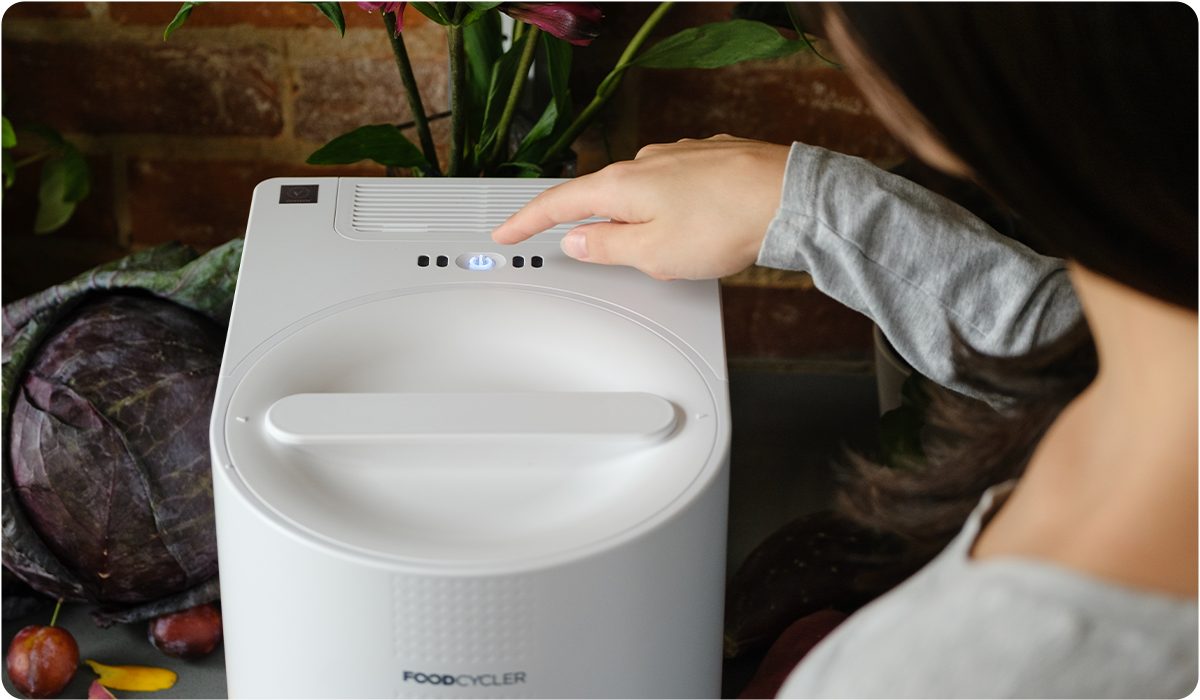
“Waste less” isn’t measurable. Specific actions like “freeze veggie scraps weekly” or “run my FoodCycler nightly” create accountability.
3. No trigger or cue

Successful habits are tied to cues. Without a clear signal — like “after dinner, check leftovers” — new behaviours don’t take root.
4. Inconvenient systems
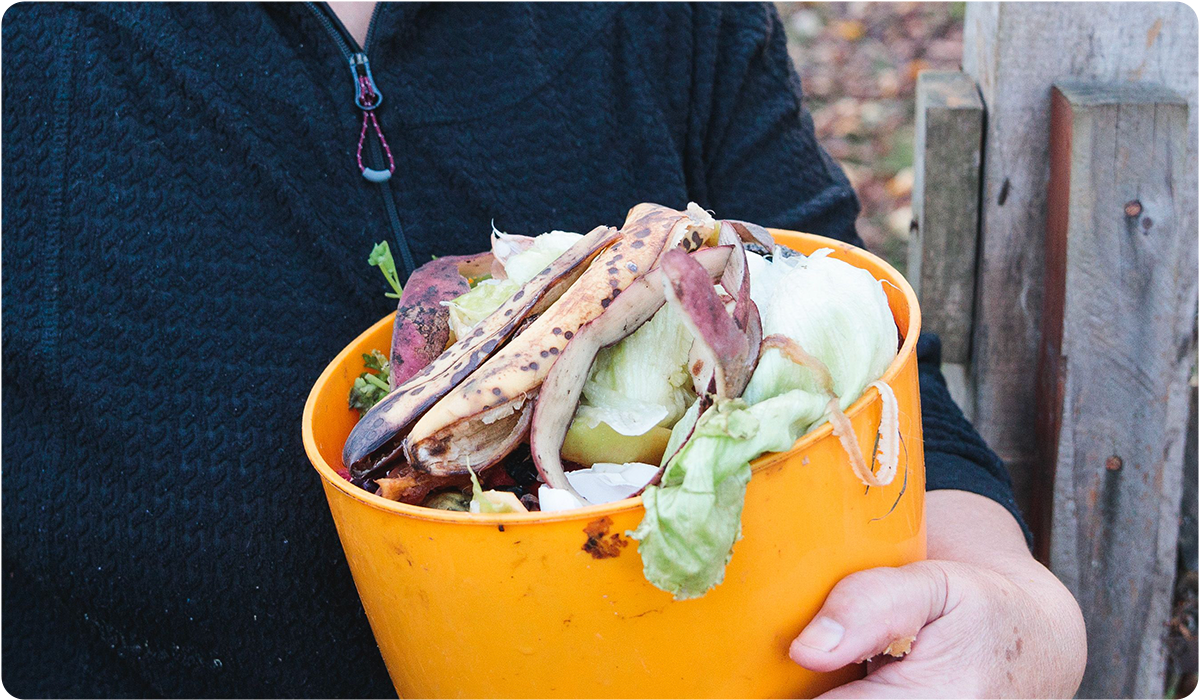
A smelly compost caddy, unclear recycling routine, or too many steps can derail good intentions.
5. No feedback loop
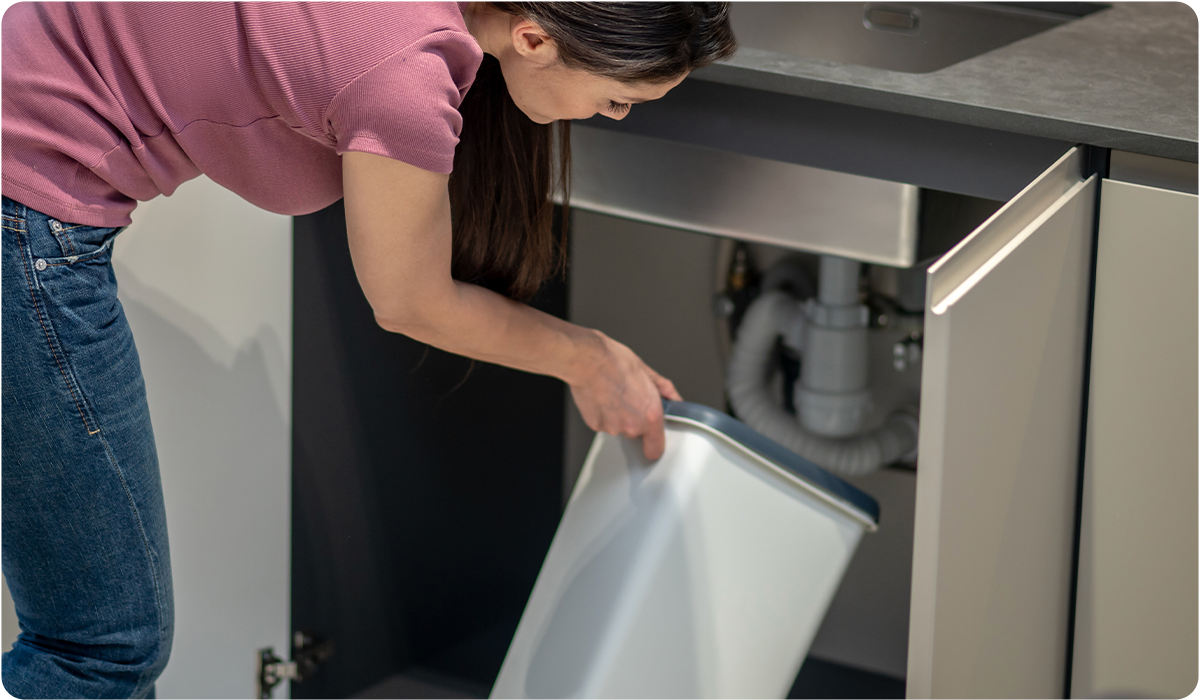
Habits need visible wins. Without seeing progress (cleaner bins, fewer trash bags, a usable food waste by-product for your garden), motivation drops.
Building Better Habits: 5 Practical Changes to Reduce Food Waste
Here are five realistic changes you can make right now to create better habits around food waste. Each ties to a simple cue and routine, making it easier to maintain long-term.
Food Waste Habits Table
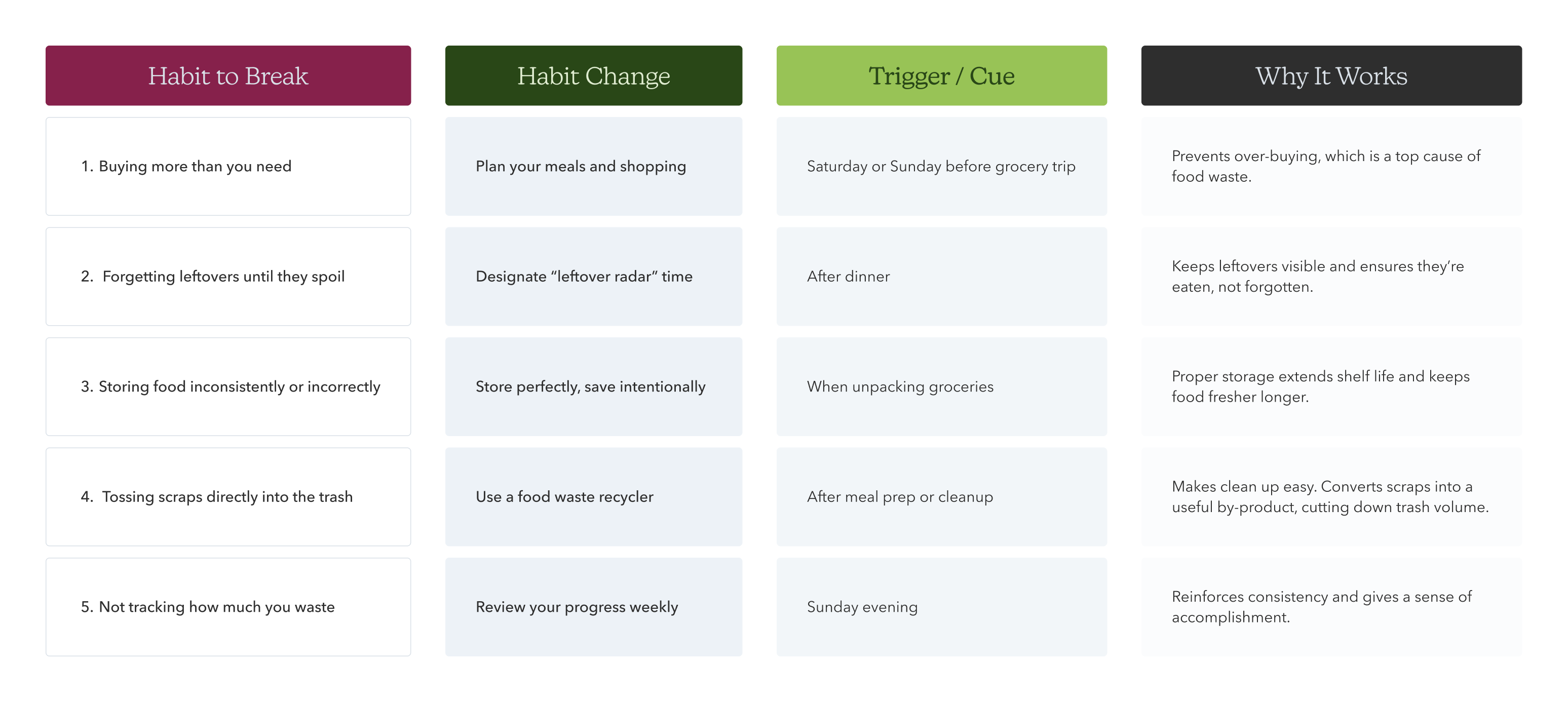
1. Plan Your Meals and Shopping
A huge portion of food waste happens before food is even cooked. Over-buying — especially perishable goods — leads directly to spoilage.
By planning your meals in advance and making a realistic shopping list, you’ll buy only what you need and reduce excess. Set a weekly time (for example, Saturday morning) to plan meals, write your grocery list, and check what’s already in your fridge or freezer.
When you plan, you waste less — and save money at the same time.
2. Designate “Leftover Radar” Time
Leftovers are one of the easiest things to forget, yet one of the simplest to save. Create a cue: after every dinner, take five minutes to store and label any leftovers.
Having this small “radar time” ensures that nothing gets pushed to the back of the fridge or wasted. You can even mark a “leftovers night” each week to use up extras in creative ways like soups, wraps, or stir-fries.
3. Store Perfectly, Save Intentionally
Proper food storage extends freshness and helps prevent spoilage. A few easy upgrades can make all the difference:
-
Use clear containers so you can see what you have
-
Label with dates
-
Freeze veggie scraps to make broth later
-
Use produce keepers or silicone lids to keep ingredients fresh
Integrating these steps into your grocery unpacking routine makes them automatic. The less you need to think about it, the easier it is to stick to.

Why This Approach Works Better Than a Resolution
Let’s recap how these changes fix the five main failure points of resolutions:
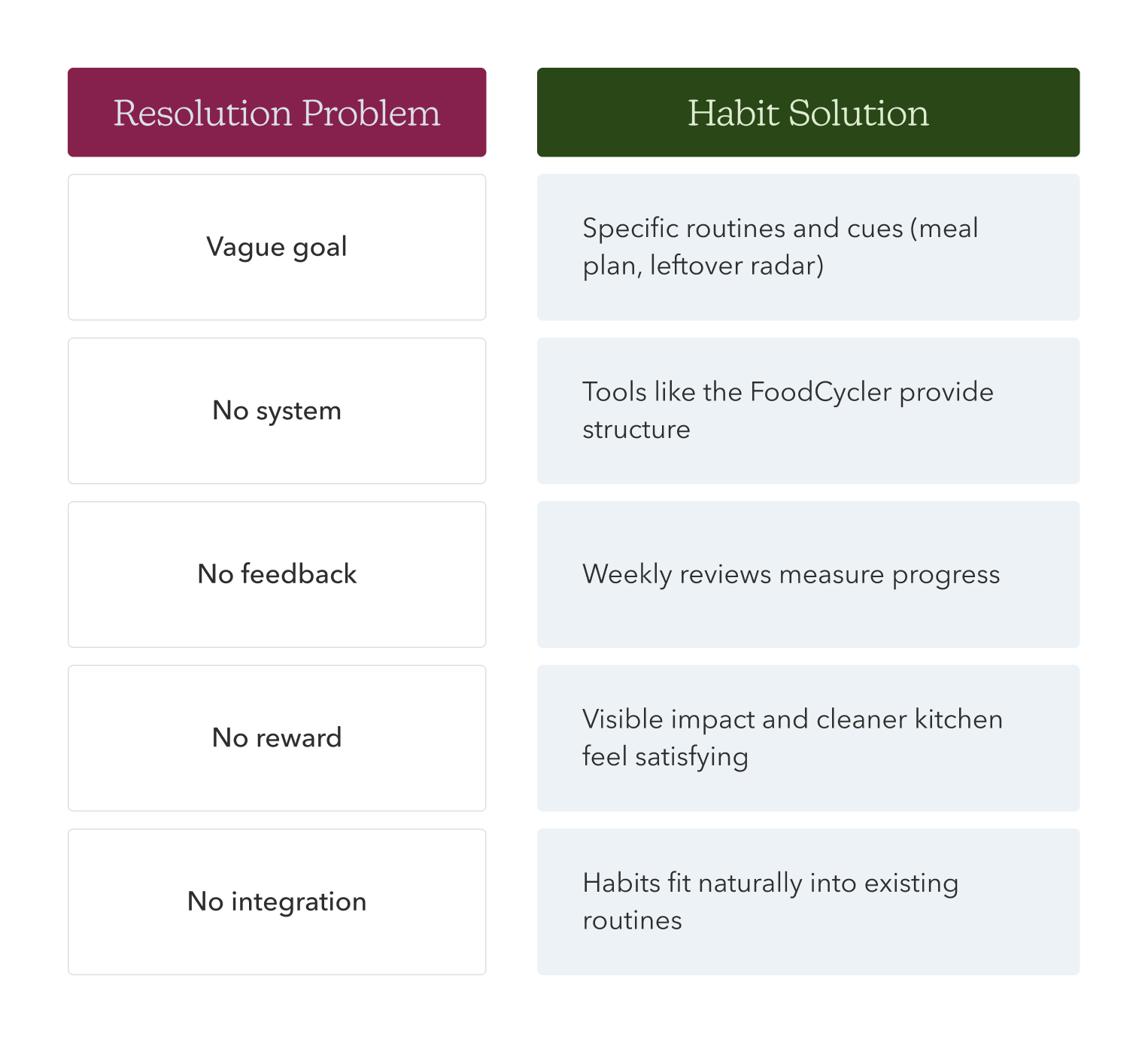
Resolutions fail when they rely on motivation alone. Habits succeed when they rely on design and repetition.
Bonus: Download and Print Our 7-Day Kickstart Plan
Here’s how to put this into action at a glance:
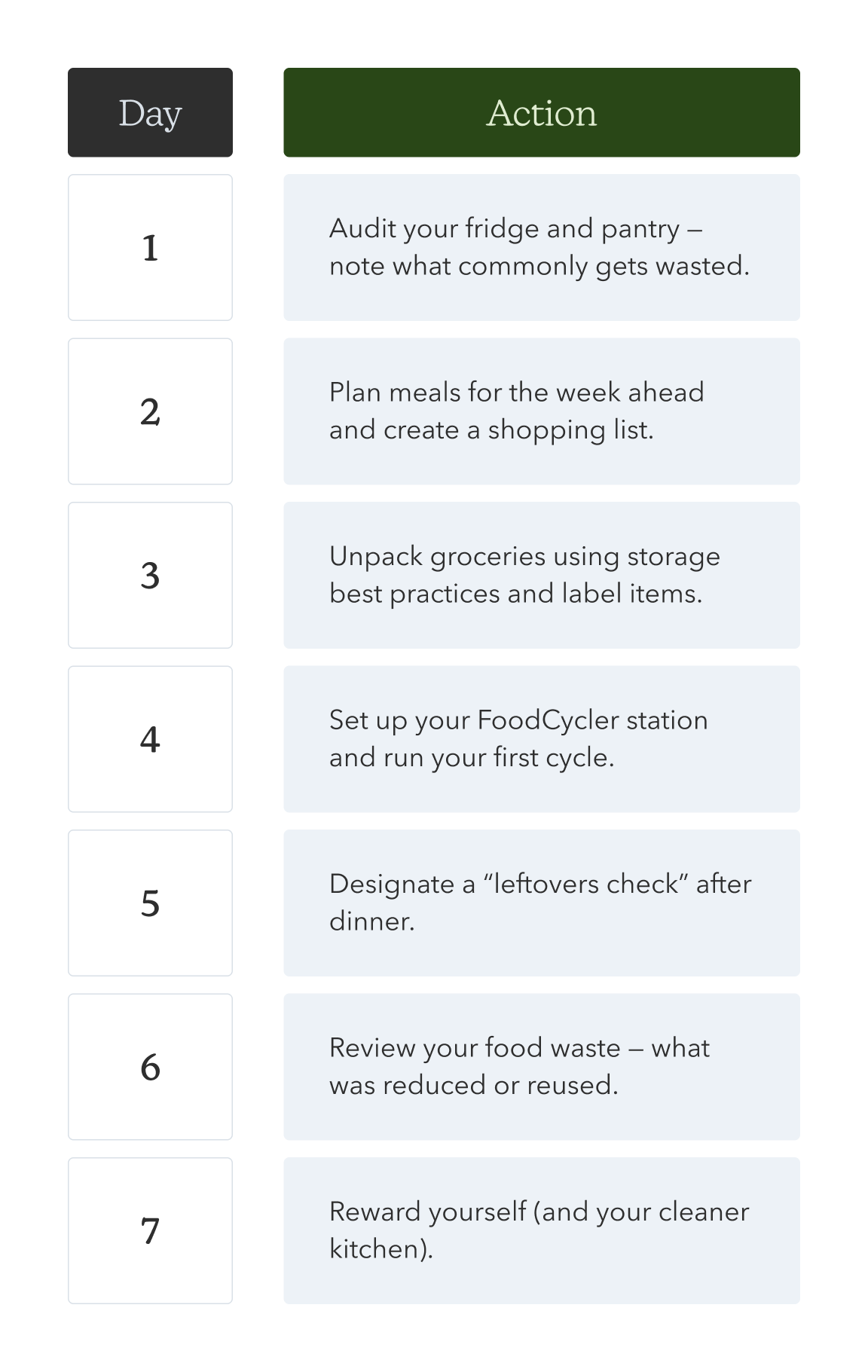
Within a month of weekly practice, your kitchen workflow will have changed permanently.
Download the Printable Checklist
Why It Matters Beyond Your Kitchen
Food waste is not just a personal inconvenience — it’s a global issue. Every banana peel, coffee ground, and forgotten leftover contributes to larger environmental costs.
-
Food waste accounts for 8–10% of annual global greenhouse gas emissions3.
-
In 2019, 66 million tons of wasted food were generated in the U.S. across retail, service, and households4
-
Canadians throw away nearly 50% of produce before it’s eaten5.
Reducing food waste helps your home and your wallet! Fewer trash bags, less smell, and a cleaner, more intentional kitchen routine.
With the FoodCycler, you’re not just reducing waste — you’re recycling it into something useful.

Build Better Food Waste Habits Today
Resolutions fail because they rely on willpower — habits succeed because they rely on design. When you intentionally structure your kitchen routine and use the right tools, reducing food waste becomes effortless.
Make 2026 the year you:
-
Plan your meals and shop smarter
-
Store and label food intentionally
-
Use a food waste recycler daily
-
Review and reward your progress weekly
Every time you run your FoodCycler, you’re taking a small but powerful step toward a cleaner, smarter, more sustainable home.
This isn’t just a resolution — it’s a new habit that lasts.Footnotes / Sources
¹ World Resources Institute. “How Much Food Does the World Really Waste?” https://www.wri.org/insights/how-much-food-does-the-world-waste
² United States Department of Agriculture (USDA). “Food Waste FAQs.” https://www.usda.gov/food-waste-faqs
³ Government of Canada. “Taking Stock: Reducing Food Loss and Waste in Canada.” https://www.canada.ca/en/environment-climate-change/services/managing-reducing-waste/food-loss-waste/taking-stock.html
⁴UNFCCC. “Food Loss and Waste Account for 8–10% of Annual Global Greenhouse Gas Emissions.” https://unfccc.int/news/food-loss-and-waste-account-for-8-10-of-annual-global-greenhouse-gas-emissions
⁵U.S. Environmental Protection Agency (EPA). “Food: Material-Specific Data.” https://www.epa.gov/facts-and-figures-about-materials-waste-and-recycling/food-material-specific-data
⁶Made in CA. “Food Waste in Canada Statistics.” https://madeinca.ca/food-waste-canada-statistics