
Eco 3™ Questions
The most common questions for FoodCycler® Eco 3™ owners.
[Eco 3] What are the specifications?
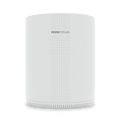
The FoodCycler® Eco 3™ is designed for smaller households and everyday countertop use. Its bucket holds up to 3.5 L (0.9 gallons) of food waste per cycle, and a typical cycle runs for approximately 4–9 hours depending on the amount, density, and moisture level of the scraps.
For current dimensions, finishes, and included accessories, visit the Eco 3™ product page.
[Eco 3] How can I clean my FoodCycler® Grinding Bucket?
If dried food waste is stuck to the Bucket, soak it in warm soapy water to remove. While the Bucket can be cleaned in the dishwasher, doing so may reduce its lifespan. If the Bucket is jammed due to food waste coagulating along the bucket interior and blades, we recommend pouring in boiling water and letting the Bucket contents soak before attempting to remove the blockage.
Any residue stuck to the bucket is caused by the oil, grease, or moisture content of the unit cycle. For an all-natural clean, try cycling citrus peels by themselves. This also helps eliminate any trapped odours in the unit's ventilation system.
It's normal to notice some dried food debris stuck to the sides or bottom of your Bucket after a cycle. Dry by-product can actually serve as a beneficial dry mix addition for the next cycle. As long as the grinding blade can fully rotate after emptying the Bucket, you can proceed to fill it for the next cycle.
CAUTION: Do not reach your hand into the FoodCycler® Eco 3™ Bucket, as the blades are extremely sharp.
[Eco 3] How much electricity does the unit consume?
Each cycle consumes an average of 0.9 kWh, roughly equivalent to running a desktop computer for the duration of the cycle. Depending on where you live, each cycle should cost only a few cents.
The FoodCycler® has built-in sensor technology that monitors dryness and humidity. Once complete, the unit stops the cycle automatically.
[Eco 3] How do I reset my Change Filter light?
After you replace your carbon filter pellets, press and hold the Power button for 3 seconds, release, then hold again for another 3 seconds until you hear an audible tone. This resets the Carbon Filter Replacement reminder.
[Eco 3] Why is my FoodCycler® emitting an odour?
This is normal. The unit could be emitting an odour for a variety of reasons.
The carbon filtration system is required to ensure a near-odourless cycle. The filters last approximately 500 cycle hours, or 3–4 months with regular use.
Even if the Replace Filter light has not gone on yet, you may need to switch out your carbon pellets. Similarly, you can continue cycling even if the filter light has gone on and no odours are apparent.
Filter life is determined by the moisture quantity in the food waste and the intensity of odours in each cycle. If you are cycling rotten, smelly, or potent food wastes such as rotten meat, fish, or old cheese, your filters may not last as long as if you were cycling simple veggie scraps and coffee grounds.
Tip: Running a cycle of mostly citrus peels will not only help keep your Bucket clean, it also eliminates any trapped odours in the unit's ventilation system.
[Eco 3] How does the FoodCycler® work?
The FoodCycler® uses a multi-phase cycle to aerate, dry, and pulverize food waste into a fine, dry, odourless by-product that can be used in gardening applications. It greatly reduces food waste volume, odours, liquids, bacteria, and methane gases that would otherwise be generated by sending food waste to landfill.
For more details, visit our How It Works page.
[Eco 3] How much food waste can the unit cycle at one time?
The Eco 3™ bucket holds up to 3.5 L (0.9 gallons) of food waste per cycle. Keep the contents below the indicator line to avoid jams and improve cycle performance.
[Eco 3] Can I add food waste to the FoodCycler® once I've already started a cycle?
Yes. For best results, add additional food waste early in the cycle, ideally within the first hour and a half. Adding scraps midway through may extend the cycle or leave some material unprocessed, in which case you can run a second cycle.
[Eco 3] Can the FoodCycler® process bones?
Yes, the Eco 3™ can process fish, chicken, pork, lamb, and other small bones. Avoid large bones because they can cause jams or damage the bucket grinding gears.
[Eco 3] What can the FoodCycler® process?
The FoodCycler® can process most food scraps, including fruits, vegetables, grains, small bones, eggshells, and coffee grounds. For the full list of do's and don'ts, visit our What to Cycle page.
[Eco 3] What can I do if my bucket is stuck inside the unit?
- Open the unit, secure the lid to the locked position, and press Start. Let the unit run for 10–20 seconds, or until you hear the grinding arms start to turn. Pause the cycle by opening the lid and try removing the bucket.
- If the contents have formed a solid mass, unplug the unit, add boiling water to the bucket, and let it sit for approximately 10 minutes.
- Use a long plastic or wooden utensil to shift the bucket contents and free the blockage. Run the cycle again for 10–20 seconds, then try removing the bucket.
CAUTION: Do not use your hands to dislodge a blockage. The bucket blades are extremely sharp.
[Eco 3] What do I do if my FoodCycler® is malfunctioning?
Prior to seeking customer support, we recommend that customers try a few troubleshooting steps on their own. If your unit is displaying codes 1–4, review the section of your error-code guide that matches what you are seeing. For codes 5–11, please reach out to Customer Support directly at support@foodcycler.com so we can assist you further.
- Start-up light sequence: no action is required. Your unit is running normally.
- Center power LED red: your carbon filter pellets are ready to be replaced, or 500 cycle hours have elapsed since you last reset your filters.
- All but the far left LEDs illuminated: your unit is experiencing temperatures which are either too high or too low to run efficiently. Move it to a room-temperature environment and try another cycle.
- All but the far right LEDs illuminated: your unit is experiencing a motor overload. If this is caused by a blockage in the Bucket, pour boiling water into the Bucket, let the contents soak for about 10 minutes, and attempt to dislodge the blockage with a tool or kitchen implement.
CAUTION: Do not use your hands to dislodge the blockage, as the Bucket blades are extremely sharp and may cause injury.
If the error code persists, contact support@foodcycler.com.
Eco 5™ Questions
Answers for the larger-capacity FoodCycler® Eco 5™.
[Eco 5] What are the specifications?
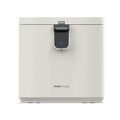
The FoodCycler® Eco 5™
- Bucket capacity: 5 L
- Unit volume: 28.9 L
- Dimensions: 13.8" H × 13.8" W × 10.3" D
- Progress indicators: real-time progress tracking LEDs
- Processing time: 4–9 hours (overnight)
- Power consumption: <0.35 kWh/L (<1.5 kWh/cycle)
- Filtration: 1 reusable filter (carbon pellets)
- Vent location: top
For current finishes and included accessories, visit the Eco 5™ product page.
[Eco 5] How can I clean my FoodCycler® Grinding Bucket?
If dried food waste is stuck to the Bucket, soak it in warm soapy water to remove. While the Bucket can be cleaned in the dishwasher, doing so may reduce its lifespan. If the Bucket is jammed due to food waste coagulating along the Bucket interior and blades, we recommend pouring in boiling water and letting the Bucket contents soak before attempting to remove the blockage.
Any residue stuck to the Bucket is caused by the oil, grease, or moisture content of the unit cycle. For an all-natural clean, try cycling citrus peels by themselves. This will also help eliminate any trapped odours in the unit's ventilation system.
It's normal to notice some dried food debris stuck to the sides or bottom of your Bucket after a cycle. Dry by-product can actually serve as a beneficial dry mix addition for the next cycle. As long as the grinding blade can fully rotate after emptying the Bucket, you can proceed to fill it for the next cycle.
CAUTION: Do not reach your hand into the FoodCycler® Eco 5™ Bucket, as the blades are extremely sharp.
[Eco 5] How much electricity does the unit consume?
Each cycle consumes an average of 1.5 kWh per cycle, which is roughly equivalent to having a desktop computer running for the same amount of time as the cycle. Depending on where you live, each cycle should not cost you more than a couple of cents.
The FoodCycler® has built-in sensor technology that monitors the dryness and humidity of the food waste. Once complete, the unit will stop the cycle automatically.
[Eco 5] How do I reset my Change Filter light?
After you replace your carbon filter pellets, press and hold the Power button for 3 seconds, release, and then hold again for another 3 seconds until you hear an audible tone to reset the Carbon Filter Replacement reminder.
[Eco 5] Why is my FoodCycler® emitting an odour?
This is normal. The unit could be emitting an odour for a variety of reasons.
The carbon filtration systems in each FoodCycler® are required to ensure a near-odourless cycle. They last approximately 500 cycle hours, or 3–4 months with regular use.
Even if the Replace Filter light has not gone on yet, you may need to switch out your filter carbon. Similarly, you can continue cycling even if the filter light has gone on and no odours are apparent.
Filter life is determined by the moisture quantity in the food waste and the intensity of odours of each cycle. If you are cycling rotten, smelly, or potent food wastes such as rotten meat, fish, or old cheese, your filters may not last as long as if you were cycling simple veggie scraps and coffee grounds.
Tip: Running a cycle of mostly citrus peels will not only help keep your Bucket clean, it also eliminates any trapped odours in the unit's ventilation system.
[Eco 5] How does the FoodCycler® work?
The FoodCycler® food waste recycler greatly reduces food waste volume, odors, liquids, bacteria, and methane gasses that would otherwise be generated by putting your food waste in the trash.
The FoodCycler uses a multi-phase cycle which aerates and pulverizes food waste to a fine, dry, odourless powder which can be used in gardening applications.
For more details, visit our How It Works page!
[Eco 5] How much food waste can the unit cycle at one time?
The Eco 5™ is the larger-capacity household FoodCycler® model. Keep food waste below the bucket's fill line, avoid packing scraps too tightly, and balance wet scraps with drier material for best results.
[Eco 5] Can I add food waste to the FoodCycler® once I've already started a cycle?
Yes, you can add additional food waste to the FoodCycler® Eco 5™ once the cycle has already begun. For best results, and to avoid extending the cycle period, we recommend adding food waste early in the cycle, or within the first hour and a half of cycling.
Adding food waste midway through the cycle may result in unprocessed food waste at the end of the cycle, as this extends the dehydration and grinding process. If this occurs, we recommend starting a second cycle until the food waste has been completely broken down.
[Eco 5] Can the FoodCycler® process bones?
Yes, the FoodCycler® Eco 5™ can process fish, chicken, pork, lamb, and other small bones. Large bones can cause jams or damage all units’ Bucket grinding gears.
[Eco 5] What can the FoodCycler® process?
Most everyday food scraps can be cycled: fruits, vegetables, grains, eggshells, coffee grounds, and small bones. Review the What to Cycle guide for the full list, including items to limit or avoid.
[Eco 5] What can I do if my bucket is stuck inside the unit?
Stuck Bucket: Open the unit. Secure the lid to the locked position and press Start. Let the unit run for 10–20 seconds, or until you can hear the grinding arms start to turn. You can pause the cycle by opening the unit lid and try removing the Bucket.
If unsuccessful, check the food content. If it is a solid mass, you may need to loosen the by-product inside the Bucket. Unplug your unit, add boiling water to the Bucket enough to submerge the solid contents, and let the Bucket sit for approximately 10 minutes.
Using a long plastic or wooden utensil, attempt to shift the Bucket contents so as to free the blockage from the grinding arm. Run the cycle again for 10–20 seconds, and try again to remove the Bucket.
[Eco 5] What do I do if my FoodCycler® is malfunctioning?
Prior to seeking customer support, we recommend that customers try a few troubleshooting steps on their own. Please reference the Error Codes document below. If your unit is displaying codes 1–6, read the section that matches the code you are seeing. For codes 7–12, please reach out to Customer Support directly at support@foodcycler.com so we can assist you further.
- LED ring goes from blue to orange to green to just the power button being illuminated: no action is required. Your unit is running normally.
- Power button illuminated: the unit is plugged in. No action required.
- Blue lights along the LED track: the unit is running a cycle and the track displays cycle progress.
- Carbon filter symbol illuminated: your carbon filter pellets are ready to be replaced, or 500 cycle hours have elapsed since you last reset your filters.
- Four right ring lights illuminated orange: the unit is experiencing temperatures that are either too high or too low to run efficiently. Move it to a room-temperature environment and try another cycle.
- Four left ring lights illuminated orange: the unit is experiencing a motor overload. If this is caused by a blockage in the Bucket, pour boiling water into the Bucket, let it soak for about 10 minutes, and attempt to dislodge the blockage with a tool or kitchen implement.
If the error code persists, contact support@foodcycler.com.
FC-30/50 Questions
Support for previous-generation FoodCycler® FC-30 and FC-50 units.
[FC-30/50] What are the specifications?
The FoodCycler® FC-30 or FC-50
- Dimensions: 12.6" W × 14.2" H × 13" L
- Weight: 24 lb in box, 19 lb out of box
For setup, safety, and model-specific operating details, use the manual linked below.
[FC-30/50] What can the FoodCycler® process?
The FC-30/50 can process many everyday food scraps, including fruit and vegetable scraps, grains, eggshells, coffee grounds, and small bones. Avoid large bones, excess oils, candy, gum, and most compostable plastics.
[FC-30/50] What can I do if my bucket is stuck inside the unit?
- Secure the lid to the locked position and press Start. Let the unit run for 10–20 seconds, or until you can hear the grinding arms start to turn. You can pause the cycle by opening the unit lid and try removing the Bucket.
- If unsuccessful, check the food content. If it is solid and will not budge, proceed to the next step.
- You may need to loosen the end product inside the Bucket. Unplug your unit, add boiling water to the Bucket enough to moisten the contents, and let it sit for about 10 minutes. Using a long kitchen utensil, move the Bucket contents around to free it from the grinding arm. Now try the cycle again for 10–20 seconds, then try removing the Bucket.
- If unsuccessful, repeat the soak-and-loosen process until the Bucket gear disengages.
[FC-30/50] What do I do if my FoodCycler® is malfunctioning?
Prior to seeking customer support, we recommend that customers try a few troubleshooting steps on their own.
Manual Reset (manually shutting down the unit to reset to its original program settings)
- Ensure that the unit is plugged in.
- Press and hold the Start/Power button for three seconds, or until you hear a beep. The unit should shut off if it was on.
- Unplug the unit and wait one minute.
- Plug the unit back in and wait ten seconds.
- Press Start/Power once, as you normally would to start a cycle.
You’re done. If the unit is still malfunctioning in some way, please contact FoodCycler™ Customer Support.
[FC-30/50] How can I clean my FoodCycler® Grinding Bucket?
If dried food waste is stuck to the Bucket, soak it in warm soapy water to remove. While the Bucket can be cleaned in the dishwasher, doing so may reduce its lifespan. If the Bucket is jammed due to food waste coagulating along the Bucket interior and blades, we recommend pouring in boiling water and letting the Bucket contents soak before attempting to remove the blockage.
Any residue stuck to the Bucket is caused by the oil, grease, or moisture content of the unit cycle. For an all-natural clean, try cycling citrus peels by themselves. This will also help eliminate any trapped odors in the unit's ventilation system.
It's normal to notice some dried food debris stuck to the sides or bottom of your Bucket after a cycle. Dry by-product can actually serve as a beneficial dry mix addition for the next cycle. As long as the grinding blade can fully rotate after emptying the Bucket, you can proceed to fill it for the next cycle.
[FC-30/50] How much electricity does the unit consume?
Each cycle consumes an average of 0.9 kWh per cycle, which is roughly equivalent to having a desktop computer running for the same amount of time as the cycle. Depending on where you live, each cycle should not cost you more than a couple of cents.
The FoodCycler® has built-in sensor technology that monitors the dryness and humidity of the food waste. Once complete, the unit will stop the cycle automatically.
[FC-30/50] How do I reset my Change Filter light?
- Remove the back panel of the unit and feel along the upper inner ledge of the unit cavity, directly above where it says Reset Filter light when the back panel is in place, until you find a small round button.
- Press and hold for upwards of 3 seconds until you hear a beep. The filter light should turn off.
[FC-30/50] Why is my FoodCycler® emitting an odour?
This is normal. The unit could be emitting an odor for a variety of reasons.
The carbon filtration systems in each FoodCycler® are required to ensure a near-odorless cycle. They last approximately 500 cycle hours, or 3–4 months with regular use.
Even if the Replace Filter light has not gone on yet, you may need to switch out your filter carbon. Similarly, you can continue cycling even if the filter light has gone on and no odors are apparent.
Filter life is determined by the moisture quantity in the food waste and the natural odorousness of each cycle. If you are cycling rotten, smelly, or potent food wastes such as rotting food scraps, fish, or old cheese, your filters may not last as long as if you were cycling simple veggie scraps and coffee grounds.
Tip: Running a cycle of mostly citrus peels will not only help keep your Bucket clean, it also eliminates any trapped odours in the unit's ventilation system.
[FC-30/50] How does the FoodCycler® work?
The FoodCycler® food waste recycler greatly reduces food waste volume, odors, liquids, bacteria, and methane gasses that would otherwise be generated by putting your food waste in the trash.
The FoodCycler uses a three-phase cycle which aerates and pulverizes food waste to a fine, dry, odourless powder which can be used in gardening applications.
For more details, visit our How It Works page!
[FC-30/50] How much food waste can the unit cycle at one time?
The FC-30 and FC-50 units have a 2.5 liter Bucket capacity. We recommend keeping the contents below the indicator line level to avoid jams.
[FC-30/50] Can I add food waste to the FoodCycler® once I've already started a cycle?
Yes, you can add additional food waste to the FoodCycler® FC-30™ once the cycle has already begun. For best results and to avoid extending the cycle period, we recommend adding food waste early in the cycle, or within the first hour and a half of cycling.
Adding food waste midway through the cycle may result in unprocessed food waste at the end of the cycle, as this extends the dehydration and grinding process. If this occurs, we recommend starting a second cycle until the food waste has been completely broken down.
[FC-30/50] Can the FoodCycler® process bones?
Yes, the FoodCycler® FC-30 can process fish and chicken bones. Large bones may cause jams or damage the unit's Bucket grinding gears.
All questions
General FoodCycler® FAQs
Answers that apply across FoodCycler® models.
How long does the FoodCycler® cycle last?
In the Eco 5™ FoodCycler®, a typical cycle takes between 4–9 hours for the food waste to become completely dehydrated and processed into the by-product.
For the FC-30 and FC-50 units, expect 4–8 hours, with an average of about 5 hours. The time needed depends on the amount of food waste being processed, the density of the food wastes, and the moisture levels contained in each. Please note that these estimates exclude the unit's cooling time, which lasts less than a half hour on average.
How does the FoodCycler® work?
The FoodCycler® food waste recycler greatly reduces food waste volume, odors, liquids, bacteria, and eliminates methane gasses that would otherwise be generated by putting your food waste in the trash.
The FoodCycler uses a multi-phase cycle, which aerates and pulverizes food waste to a fine, dry, odourless powder which can be used in gardening applications.
What are the 3 stages of the cycle - Drying, Grinding, Cooling?
The drying phase is focused on removing moisture from your food waste.
The grinding phase continues the drying process, removing any remaining moisture, while the bucket grinding blades agitate and pulverize the food waste.
The cooling phase is a safety measure to return the processed food waste to near-room temperature, making it safe to handle. Power usage is minimal during the cooling phase.
Please do not skip the cooling cycle. It is for your safety and for the safe handling of your FoodCycler® and grinding Bucket.
How much electricity does the unit consume?
Each cycle consumes approximately 0.8–1.5 kWh per cycle, which is roughly equivalent to having a desktop computer running for the same amount of time as the cycle. Depending on where you live, each cycle should not cost you more than a couple of cents.
The FoodCycler® has built-in sensor technology that monitors the dryness and humidity of the food waste. Once complete, the unit will stop the cycle automatically.
What is Vortech™?
The Vortech™ grinding system utilizes a multi-blade steel rotary system that effectively pulverizes a wide variety of soft and hard food waste scraps, transforming them into smaller, dried granules.
The flow stream that powers the turning system pushes the food scraps into the walls of the container, breaking down and squeezing the pulp further to the bottom while removing moisture and processing the matter into a fine dry substance. The resulting by-product contains rich nutrients that can be added to soil as an amendment for gardening uses.
How long do the filters last?
The carbon filters last between 3–4 months with regular use, or about 500 cycle hours. Denser, wetter, and smellier food scraps can use up filters more quickly than simple veggie scraps and eggshells.
Can I recycle my filters or bucket?
FoodCycler® products use a refillable filter system, which means that you can keep using your filters indefinitely and simply replace the carbon itself when it is ready to be changed.
The filter carbon is a harmless organic material and can be safely disposed of in your regular trash or organics collection bin. Please follow your municipal waste guidelines in disposing of your used carbon. Buckets can be recycled through your local metal scrap collection service.
Why is my FoodCycler® emitting an odor?
The unit could be emitting an odor for a variety of reasons.
The carbon filters are required to ensure a near-odorless cycle. They last approximately 500 cycle hours, or 3–4 months with regular use.
Even if the replace filter light has not gone on yet, you may need to switch out your filter carbon. Similarly, you can continue cycling even if the filter light has gone on and no odours are apparent.
Filter life is determined by the moisture quantity in the food waste and the natural odorousness of each cycle. If you are cycling rotten, smelly, or potent food wastes such as rotten meat or old cheese, your filters may not last as long as if you were cycling simple veggie scraps and coffee grounds.
How can I clean my FoodCycler® grinding bucket?
The removable grinding bucket is dishwasher-safe. However, you do not really need to clean it at all. If the bucket is not jammed with processed food waste, you can simply continue to add food waste to the bucket and cycle as usual.
Any residue stuck to the bucket is almost always a cosmetic issue and is caused by the oil, grease, or moisture content of the unit cycle. For an all-natural clean, try cycling citrus peels by themselves. This will also help eliminate any trapped odors in the unit's ventilation system.
If dried food waste is stuck to the bucket, soak it in warm soapy water to remove.
CAUTION: Do not reach your hand into the FoodCycler® bucket, as the blades are extremely sharp.
What can The FoodCycler® process?
- Most fruit and vegetable scraps
- Meat, shellfish, and poultry scraps
- Cheese
- Beans, seeds, and legumes
- Chicken and fish bones or shells
- Coffee grounds, filters, and tea bags
- Eggs and eggshells
What can't FoodCycler® process?
Avoid:
- Hard, dense bones (beef, pork, lamb, and bison)
- Candy or gum
- Cooking oils and greases
- Hard pits such as peaches, apricots, and nectarines
- Nuts and other hard shells
- Pineapple leaves
- Watermelon rinds
In limited quantities:
- Cake
- Rice
- Bread
- Pasta
- High-sugar fruits such as grapes, bananas, melon, oranges, and pineapple
- Sauces
- Jams
- Jellies
- Peanut butter
Cut up prior to cycling:
- Fibrous herbs and plants such as celery and parsley
- Corn cobs and husks
- Paper towels and tissue
- Pineapple leaves
- Whole fruits and vegetables
How much food waste can the unit cycle at one time?
The new FoodCycler® Eco 5™ has a 5 L Bucket capacity.
The FC-30 and FC-50 units have a 2.5 liter Bucket capacity. We recommend keeping the contents below the indicator line level to avoid jams.
Can I add food waste to The FoodCycler® once I’ve already started a cycle?
You can add additional food waste to the FoodCycler® once the cycle has already begun, preferably early in the drying or grinding phases.
Adding food waste midway through the cycle may result in unprocessed food waste at the end of the cycle, as this extends the dehydration and grinding process. If this occurs, we recommend starting a second cycle until the food waste has been completely broken down.
What can I do if my bucket won't fit inside the unit?
Make sure the bucket is clean, empty, and properly aligned before lowering it into the unit. Check for dried residue around the bucket base or drive connection that could prevent it from seating correctly. If the bucket still will not fit, contact support.
Can I empty the bucket as soon as the unit finishes its cycle?
Once the unit beeps or shuts off following a cycle, the Bucket is safe to handle, though it may still be quite warm. Please exercise caution when handling the Bucket directly after a cycle.
Can I open the lid during the process to see what's going on?
We advise that you keep the lid closed until the cycle is complete to prevent the cycle from being prematurely or improperly finished, or from lasting longer than usual.
The only exception is if you add more food waste to the unit while it is recycling, but we strongly recommend that you take care when opening the lid mid-cycle, as the food waste and bucket get very hot during the process.
Can I run my FoodCycler® in the garage?
Yes you can. Please be aware that, like most appliances, the FoodCycler® is not intended to function in below-freezing temperatures. The FoodCycler® must be in a closed, dry environment where there is no risk of it being rained on or otherwise subjected to the elements.
Will methane gases be produced during the cycle?
Methane gas is emitted during the decomposition process of organic materials in an anaerobic, or no-air, environment. Methane is 30 times more insulative of atmospheric heat than CO₂ and is therefore a huge contributing force to global climate change.
Since the FoodCycler® aerates the food waste while heating and pulverizing, which is an aerobic environment, those environmentally damaging methane gases are not produced at all.
What are the specifications?
The FoodCycler® Eco 5™
- Bucket capacity: 5 L
- Unit volume: 28.9 L
- Dimensions: 13.8" H × 13.8" W × 10.3" D
- Progress indicators: real-time progress tracking LEDs
- Processing time: 4–9 hours (overnight)
- Power consumption: <0.35 kWh/L (<1.5 kWh/cycle)
- Filtration: 1 reusable filter (carbon pellets)
- Vent location: top
- Transmission torque: 24 ft. lbs max
The FoodCycler® FC-30 or FC-50
- Dimensions: 12.6" W × 14.2" H × 13" L
- Weight: 24 lb in box, 19 lb out of box
What do I do if my FoodCycler® is malfunctioning?
Prior to seeking customer support, we recommend that customers try a few troubleshooting steps on their own.
FoodCycler® FC-30 Manual Reset
- Ensure that the unit is plugged in.
- Press and hold the Start or Power button for three seconds, or until you hear a beep. The unit should shut off if it was on.
- Unplug the unit and wait one minute.
- Plug the unit back in and wait ten seconds.
- Press Start or Power once, as you normally would to start a cycle.
If the unit is still malfunctioning in some way, please contact FoodCycler™ Customer Support.
What's the difference between the Original FoodCycler® FC-50 and the FoodCycler® Eco 5™?
Eco 5™
- Bucket capacity: 5 L
- Unit volume: 28.9 L
- Recommended household size: 3+
- Dimensions: 13.8" H × 13.8" W × 10.3" D
- Progress indicators: real-time progress tracking LEDs
- Processing time: 4–9 hours (overnight)
- Power consumption: <0.35 kWh/L (<1.5 kWh/cycle)
- Filtration: 1 reusable filter (carbon pellets)
- Vent location: top
FC-50
- Bucket capacity: less than 2.5 L
- Unit volume: approximately 30.5 L
- Recommended household size: 1–2
- Dimensions: 14.2" H × 11" W × 12.6" D
- Progress indicators: 3 phase LEDs
- Processing time: 4–8 hours (overnight)
- Power consumption: approximately 0.8 kWh per cycle
- Filtration: 2 reusable filters
- Vent location: back
Can the FoodCycler® Process Bones?
Key Takeaways
- Powered by Vortech® Grinding Technology, the FoodCycler® can process small bones such as chicken and fish bones.
- Only process pork and lamb bones in small amounts.
- Large bones can cause jams and damage your bucket’s grinding gears.
Our food waste recycler can process almost anything off your plate, from shellfish (even their shells) to meat and poultry. But what about their bones?
Most traditional food grinders are not designed to process bones. It’ll quickly dull their blades, strip their gears, and even break the machine. But FoodCycler is no food grinder. It’s a food waste recycler, designed to transform your food waste from its original form into a by-product that’s easier to dispose of and recycle than other food waste removal options.
Yes, Your Food Waste Recycler Can Process Bones.
When we say the FoodCycler can process almost anything, we mean it. The FoodCycler® Eco 5TM can process fish, chicken, pork, lamb, and other small bones, while the FoodCycler® FC-30 and FC-50 can process fish and chicken bones.
This is all thanks to our Vortech® Grinding Technology. This advanced pulverizing technology is capable of handling the toughest food scraps, minimizing stress to the grinding gear.
But Be Careful About Which Bones You Process
While durable and versatile, our food waste solutions should still be used with caution. Not all bones are the same size or have the same density, influencing which can and cannot be processed.
Generally, you should stick to pliable, porous bones from smaller animals, such as chicken bones. Large and dense bones can cause jams or damage all units’ bucket grinding gears.
Safe for Processing
Smaller, softer bones
- Fish
- Poultry (e.g., chicken)
Only In Small Amounts
Larger bones
- Pork
- Lamb
Not Recommended
Large, dense bones
- Beef
- Bison
- Large Game
Why Process Bones with FoodCycler?
Household garbage isn’t just piled up. It’s taken to one of the U.S.’s 3,000 active landfills, where, while contained, it decomposes and can release methane gas.
According to research from the University of Colorado, Boulder, these landfills also produce carbon dioxide, water vapor, and trace amounts of oxygen, nitrogen, hydrogen, and non-methane organic compounds. These gases contribute to climate change, can create smog, and damage ecosystems.
National Geographic asserts that damage caused by landfills can be reduced simply by reducing our reliance on them. And one easy way to do so is with the FoodCycler, which minimizes the amount of waste brought to landfills, one cycle at a time.
Process Your Food Waste Quietly and Efficiently (Even Bones)
No need to throw your leftover food bones into the garbage. Not just for fruit and vegetable waste, the science-based technology of our FoodCycler makes it possible to transform almost all your food scraps into a malleable by-product – even bones. Buy yours now.
Still have questions? Contact us.
By-product
Foodilizer®
Your nutrient-rich FoodCycler® by-product, explained.
What can I do with my FoodCycler® by-product (Foodilizer™)?
Foodilizer® can be mixed into soil or compost as a nutrient-rich amendment. For best results, mix it thoroughly with soil or carbon-rich materials and allow time for the soil to enrich before planting.
How can I store my by-product during the winter?
Store dry Foodilizer® in an airtight container in a cool, dry place where temperatures do not fluctuate dramatically. Avoid reintroducing moisture, which can cause odours or mold.
What color and texture should I expect from Foodilizer®?
The color and texture of your Foodilizer® will vary depending on the materials added to your FoodCycler® cycle. This is completely normal and part of the natural process.
How do I compost with Foodilizer®?
Foodilizer® can be used to supercharge compost by adding nutrients and helpful microbes that speed up decomposition. Mix it into your compost pile along with regular food scraps and carbon-rich materials such as dried leaves or yard trimmings. For best results, add Foodilizer® a few weeks before planting so the soil has time to enrich.
What if there are odours or animals around my garden after using Foodilizer®?
If you notice smells or critters near your garden plot after adding Foodilizer®, it likely means the by-product is not fully mixed into the soil. Add more soil and mix thoroughly to prevent odours and pests.
What happens if Foodilizer® gets wet?
Foodilizer® can produce odours and be susceptible to mold if moisture is reintroduced. Store it in an airtight container where the temperature does not fluctuate, and make sure there is enough aeration when incorporating it into soil, a garden bed, or compost pile.
Manuals
Download your FoodCycler® Manual
Reference guides for setup, maintenance, and model-specific troubleshooting.

Eco 3™ Manual
Download the full user guide for the FoodCycler® Eco 3™.

Eco 5™ Manual
Download the full user guide for the FoodCycler® Eco 5™.

FC-30 / FC-50 Manual
Download the full user guide for the FoodCycler® FC-30 / FC-50.
Policies
Shipping & warranty
The fine print you need to shop with confidence.
Shipping
We offer free shipping on orders over $100 CAD and ship across Canada and the US. See our full policy for timelines, costs, and returns.
Warranty & guarantee
Every FoodCycler® is backed by a limited warranty and a 30-day money-back guarantee so you can try it risk-free.