
We all know food waste is a problem1 and that sending it to landfill only makes it worse. But with so many solutions available today, a practical question remains:
How much food waste can a household actually divert in real, measurable terms?
The answer: more than most people expect—and it adds up quickly.
Let’s break it down using real numbers, simple assumptions, and what this actually means for your home and environmental impact.
Household Food Waste Stats (The Starting Point)

Before looking at diversion, we need a baseline.
- The average North American household wastes approximately 140 kg (309 lbs) of food per year2
-
That’s roughly 2–4 kg (4–9 lbs) per week
-
Up to 60% of that waste is avoidable3
In simple terms: Most households are throwing out several kilograms of food every week - much of it organic material that could be recycled instead of landfilled.
What Does “Food Waste Diversion” Actually Mean?
Food waste diversion means keeping food scraps out of landfill and recycling them into a more sustainable output.
This can include:
- Municipal composting programs
- Backyard composting
- In-home food waste recycling solutions
Why it matters:
- Food waste in landfills produces methane (a potent greenhouse gas)4
- Households are responsible for nearly half of all food waste5
Real Diversion Numbers (Using a Typical Household Routine)
Let’s model a realistic scenario using a common in-home routine:
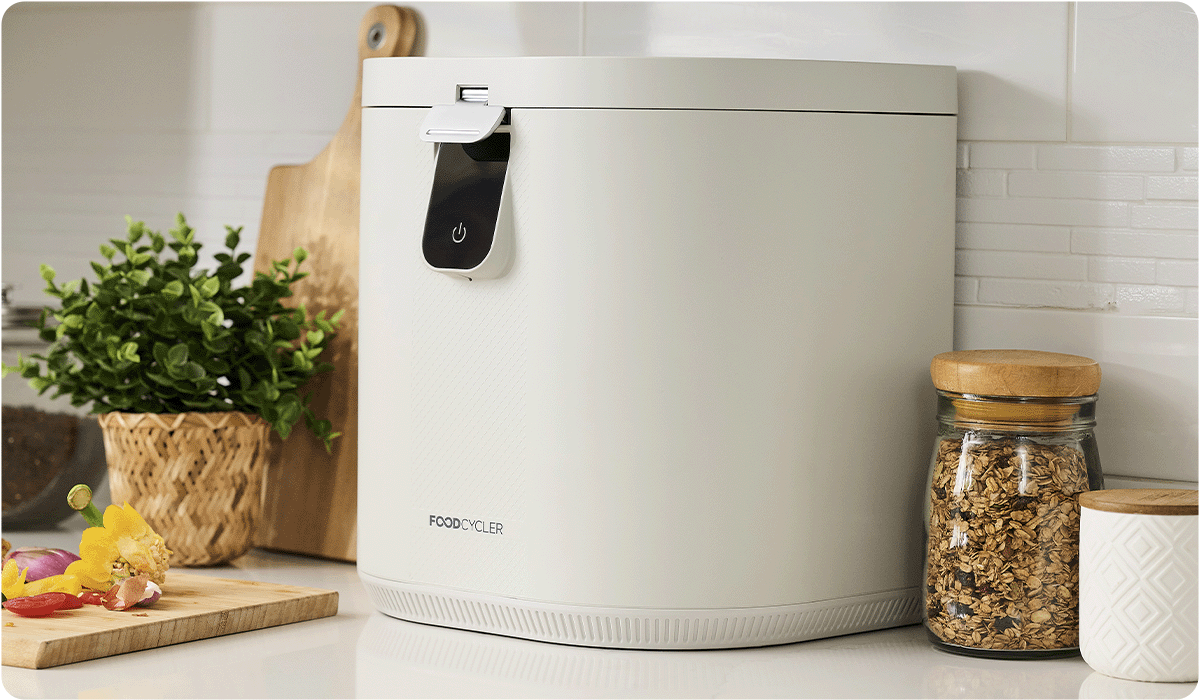
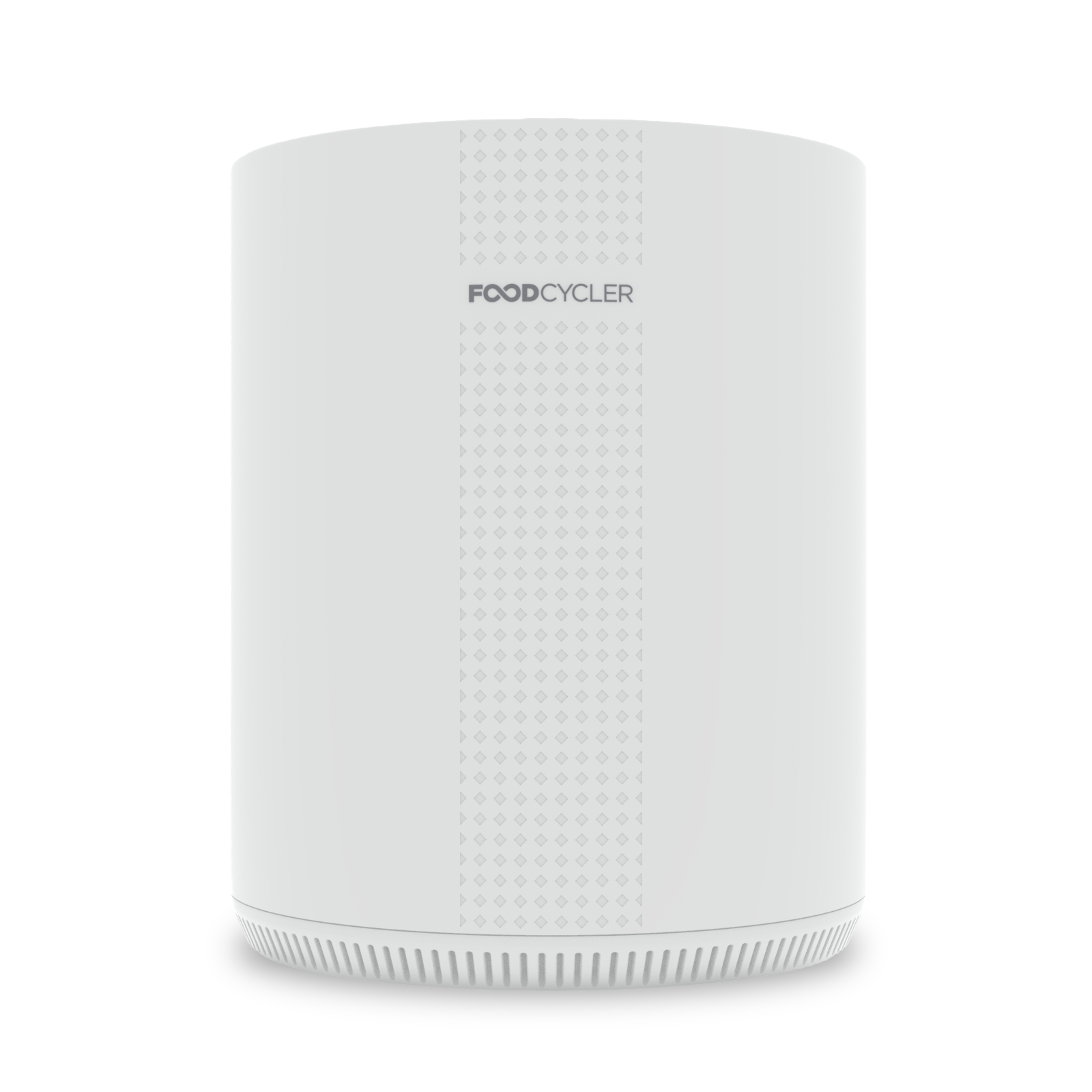
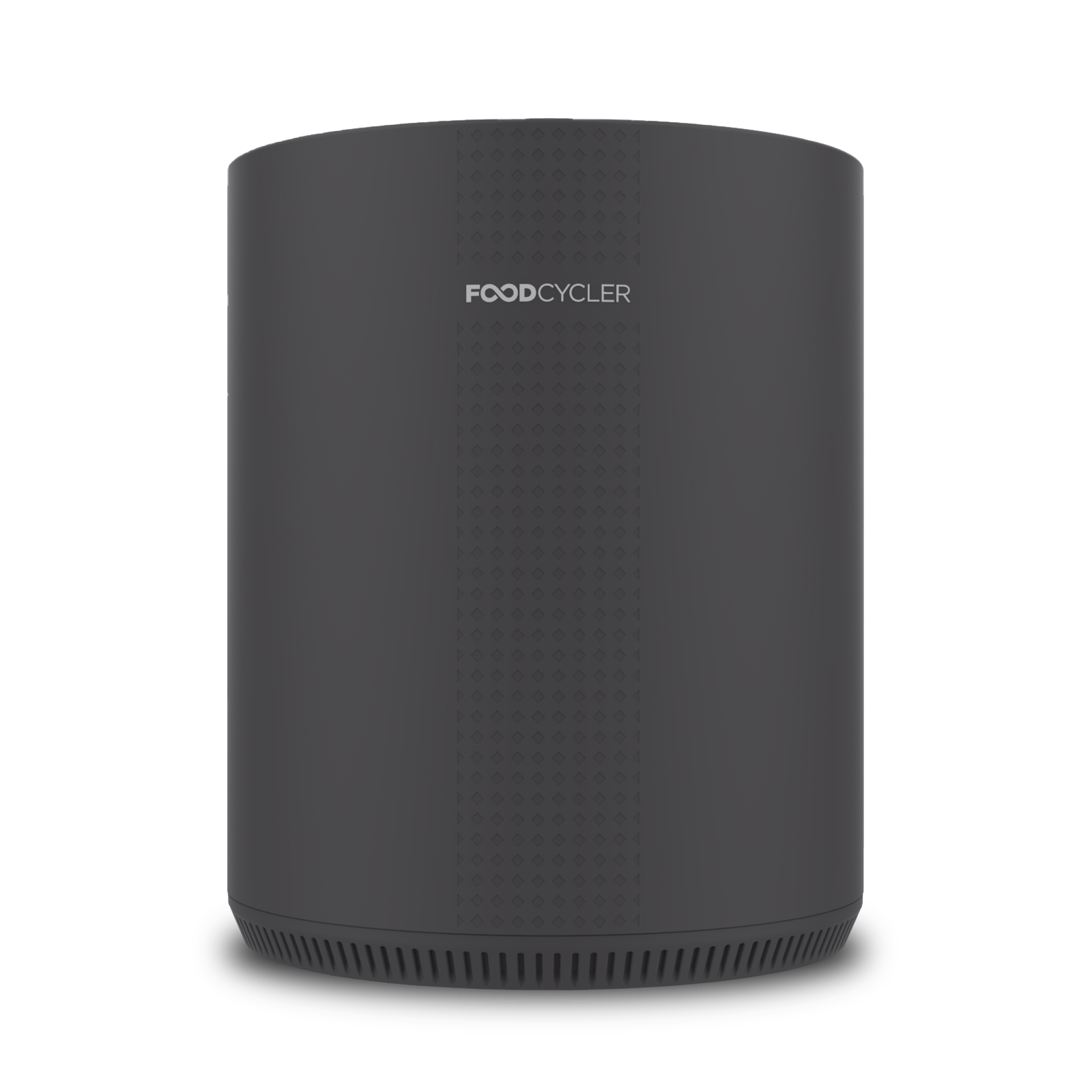
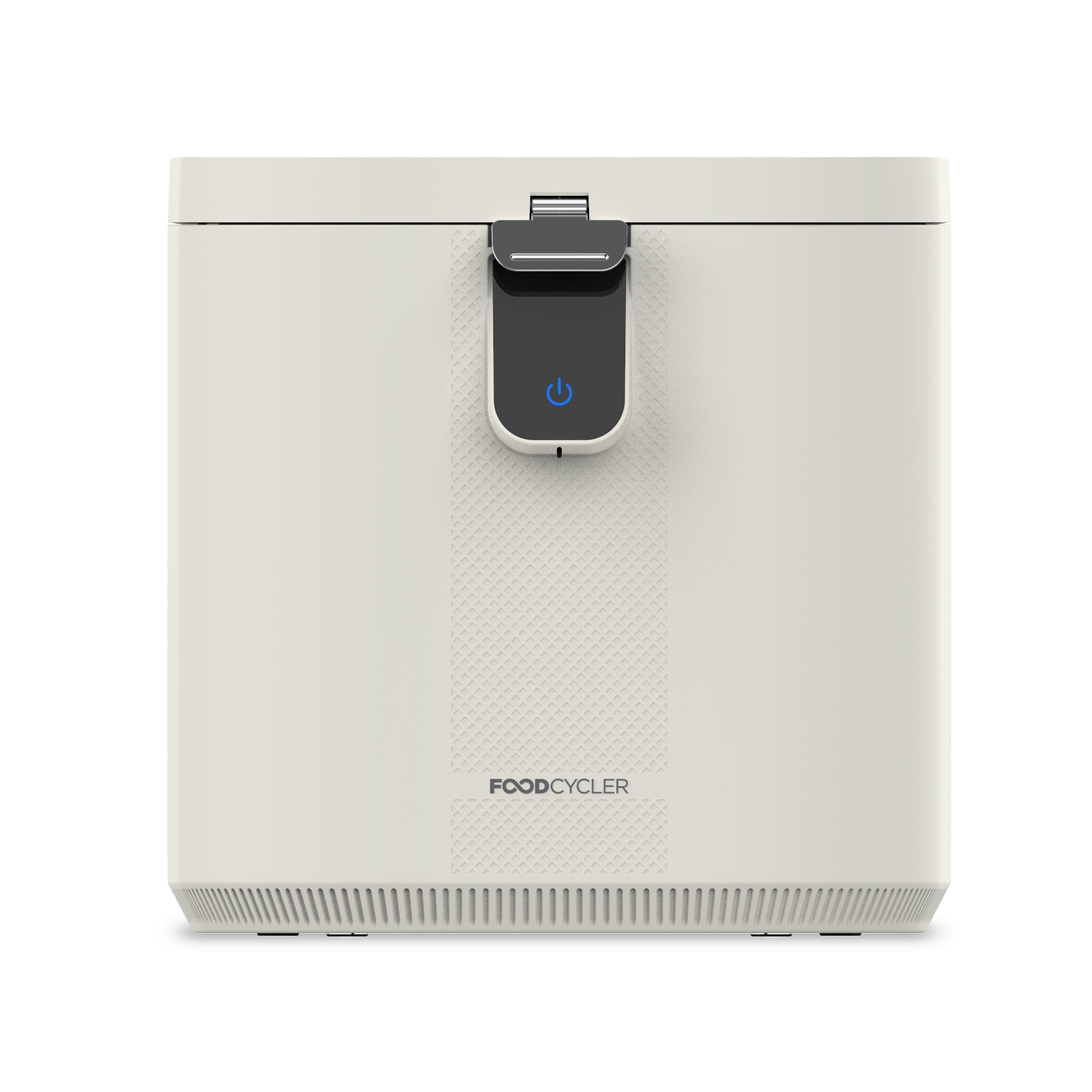
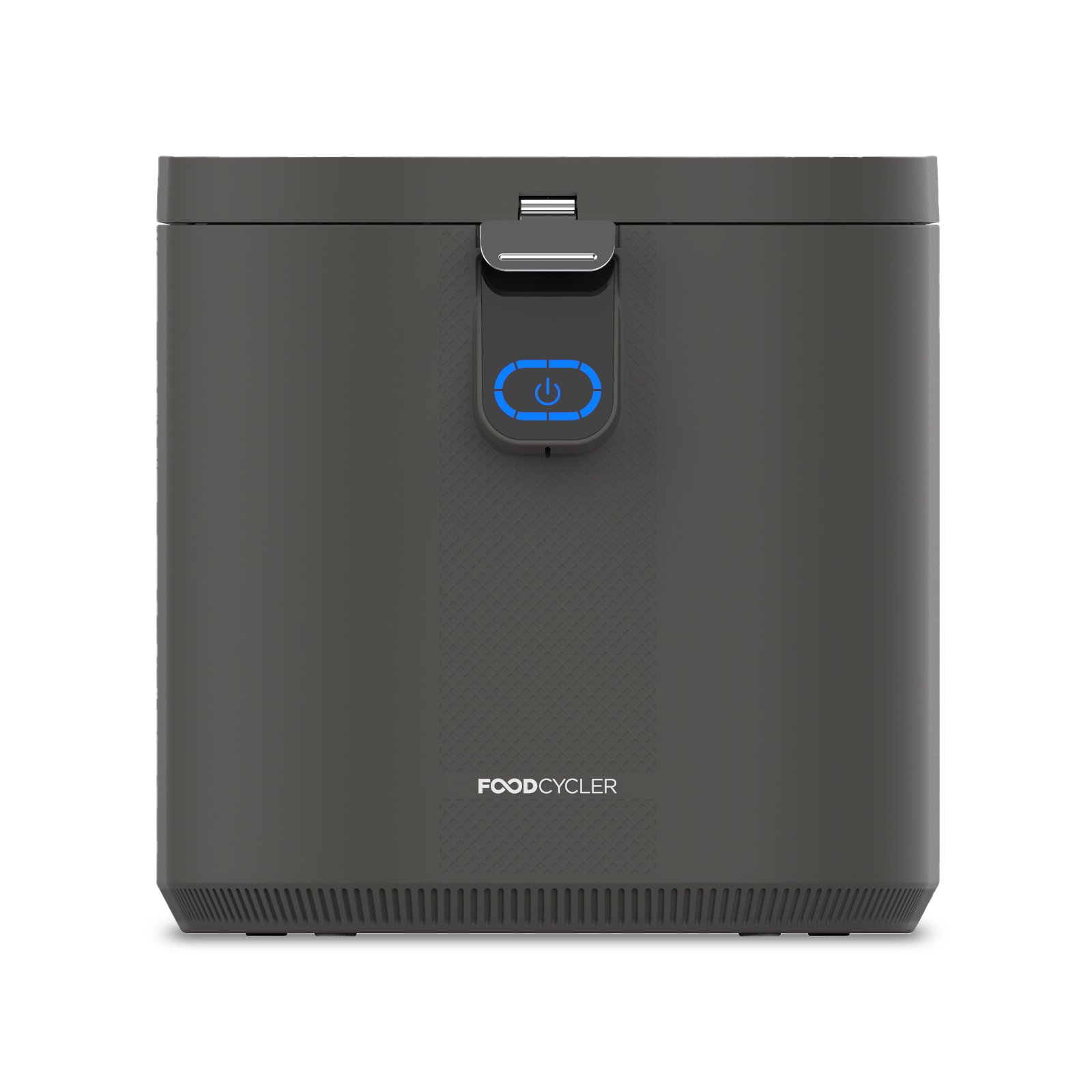
Reference appliance: FoodCycler Eco 5
- Bucket capacity: 5L per cycle
- Average use: 3 cycles per week
- Assumption: 1L ≈ 0.3 kg of food waste, so 5L = 1.5 kg
Weekly Diversion Capacity
-
1.5 × 3 cycles = 4.5 (9.9 lbs) per week (capacity)
The average household generates 2–4 kg/week, meaning:
- This capacity is sufficient to handle typical household food waste
- It allows for flexibility during high-volume periods (meal prep, hosting, seasonal cooking)
Monthly Diversion
-
4.5 kg/week × 4 = 18 kg ( 40 lbs) per month (capacity)
Annual Diversion Potential
- 18 kg/month × 12 = 216 kg (476 lbs) per year (capacity)
Real-world adjustment: Not every cycle will be full, and usage may vary. These numbers cover 3 cycles a week, but for high volume days/weeks, the Eco 5 can be run up to 7 days a week.
More realistic household diversion range:
- 100–200 kg/year (small households)
- 200–400 kg/year (average households)
- 400–600+ kg/year (high-use households)
This aligns more closely with actual waste generation—while still showing strong diversion potential.
What That Means for Emissions
Using our benchmark:
1 kg food waste = 1 kg CO₂ emissions
Impact Breakdown
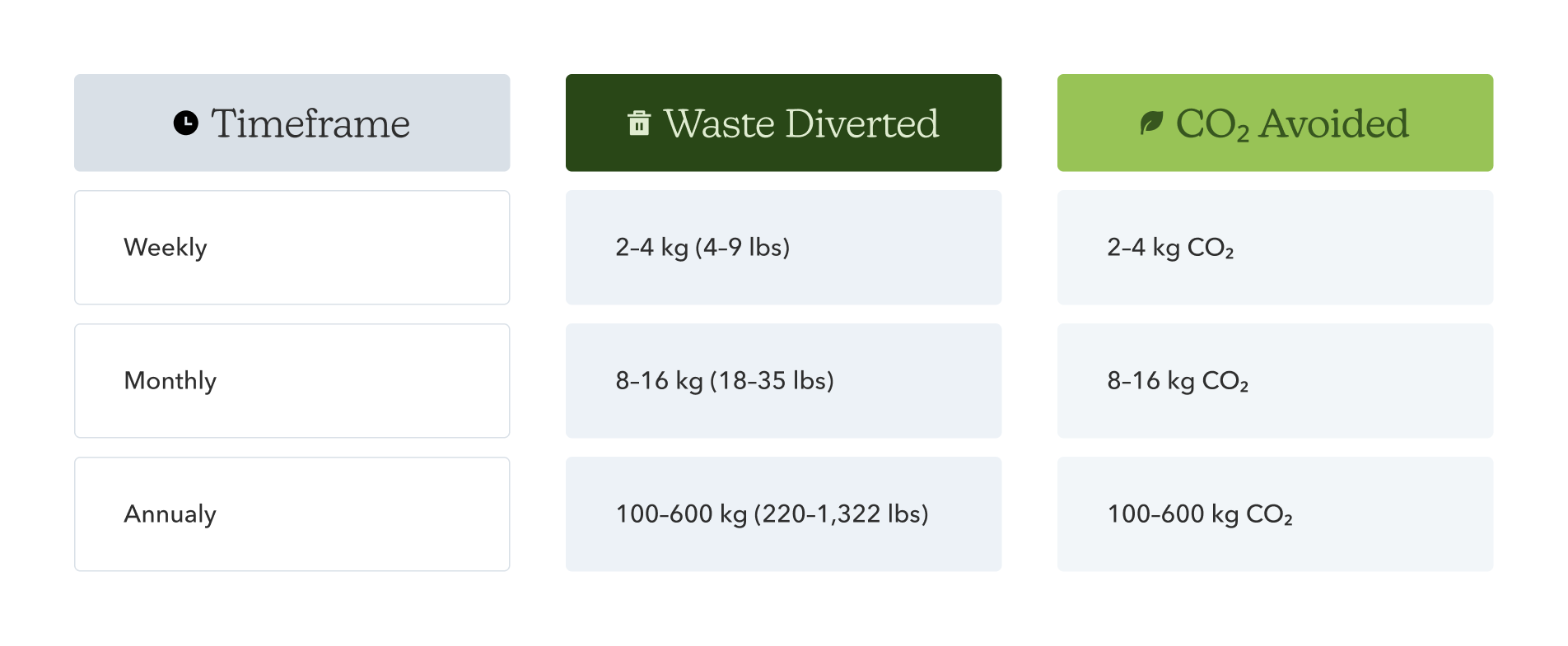
Even at the lower end, this represents a meaningful reduction in household emissions and landfill contribution.
Why Most Households Don’t Divert This Much (Yet)
Despite the potential, most households don’t fully divert their food waste.

Common barriers:
-
Inconvenience (storage, smells, effort)
-
Limited access to composting programs
-
Inconsistent habits
Even though many households participate in composting6 in some form: Participation doesn’t always equal full diversion


How to Measure Your Own Food Waste at Home
If you want real numbers for your household, start here:
Simple Tracking Method (1 Week)
- Keep a small container for food scraps
- Weigh it daily or at the end of the week
- Multiply by 4 for a monthly estimate
Other Tools
- Kitchen scale + notes app
- Waste tracking apps
- Smart appliance tracking (cycle-based)

Real-Life Household Scenarios
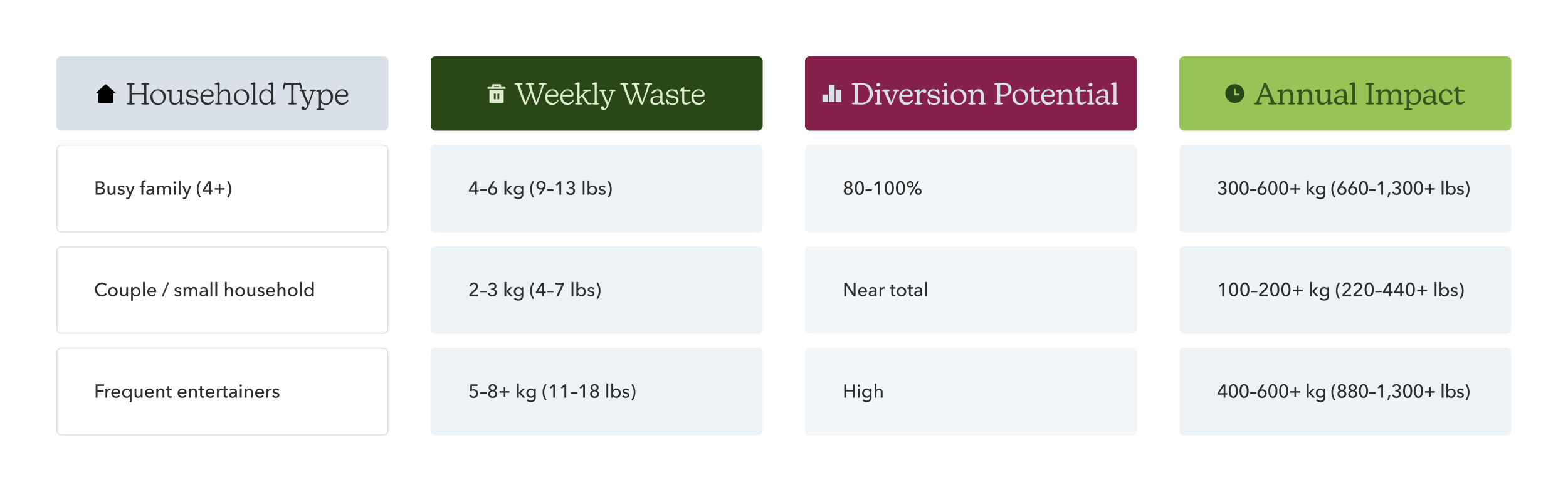
The takeaway: Most households can divert the majority of their food waste with consistent routines.
What This Means (Beyond the Numbers)
This isn’t just about reducing waste—it’s about changing how waste is managed at home.
When food waste is consistently recycled:
- Garbage volume decreases significantly
- Odors and mess are reduced
- Waste becomes a controlled, measurable output
The shift: From disposal → to daily, predictable recycling
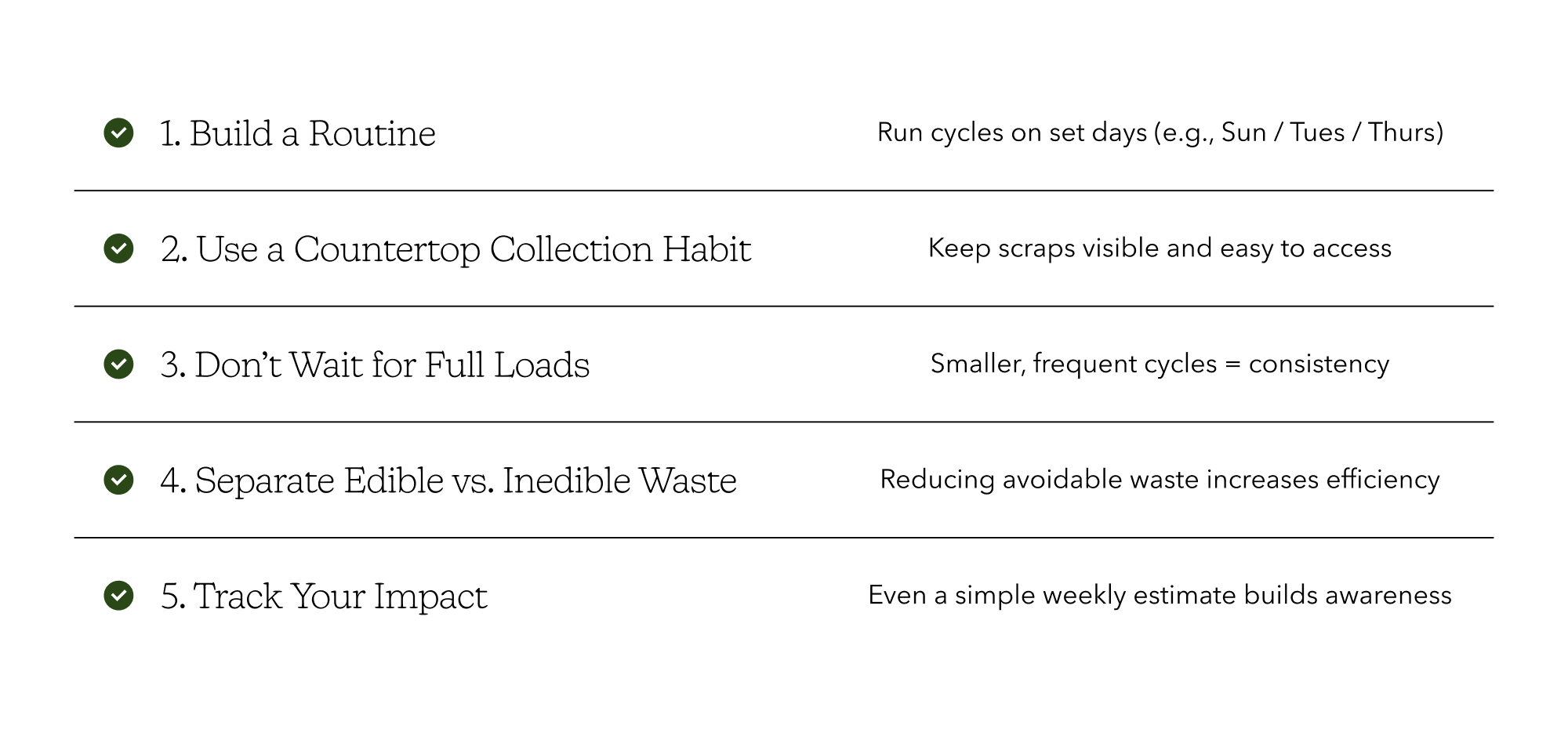
5 Practical Tips to Maximize Food Waste Diversion
The Bottom Line: How Much Can You Really Divert?
Let’s simplify it:
- Average household waste: ~140 kg (or ~309 lbs) per year
- Real diversion potential: 300–600 kg (or 661-1,323 lbs) per year (with consistent use)
- Emissions avoided: up to 600 kg CO₂ (up to 1,323 lbs CO₂) per year
In many cases, households can divert most—if not all—of their food waste with consistent habits
Final Thought
Food waste isn’t just an environmental issue, it’s a household habit problem with an easy, measurable solution.
And when you put real numbers behind it, the impact becomes clear:
- Small daily actions → hundreds of pounds diverted
- One household → real, measurable change