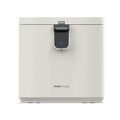
Person holding FoodCycler bucket full of food scraps.

What Can I Put In My FoodCycler?

FoodCycler Do’s & Don’ts

Use your FoodCycler the right way to get the best results and protect your unit. Follow these simple guidelines for what to add — and what to avoid.

Suitable

  • Veggie & fruit scraps
  • Meat, fish, poultry
  • Poultry & fish bones
  • Coffee grounds & tea leaves (including coffee filters & tea bags)
  • Beans, seeds & legumes
  • Eggs & seashells
  • Shellfish (including shells)

In small amounts

  • Sauces, dressings & gravies
  • Dairy products
  • Jellies, jams & puddings
  • Starches (including bread, rice, cake, etc.)
  • Pork & lamb bones
  • Hard pits (including peach, apricot, lychee & mango)

Cut up prior

  • Paper towel & tissue
  • Corn cobs & husks
  • Whole vegetables
  • Fibrous plants (including celery, asparagus, parsley, etc.)

Not recommended

  • Cardboard
  • Oils & fats
  • Candy & gum
  • Most “compostable” plastics
  • Beef bones

A Balanced Bucket

A balanced bucket contains a mix of food types rather than one single category. Combining moist scraps (like fruits and vegetables) with drier items (such as bread or grains) helps the FoodCycler process more efficiently and evenly.
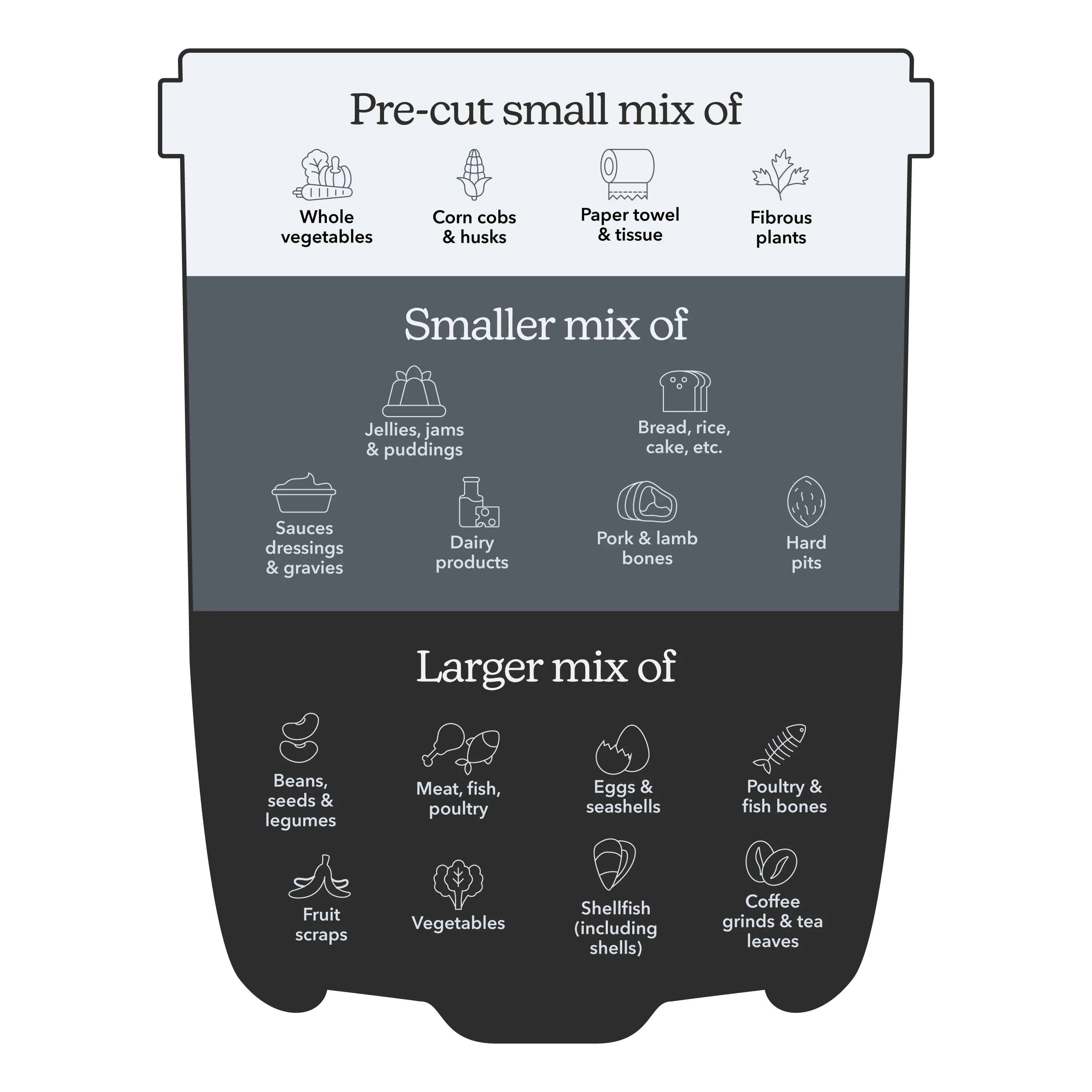
Pre-cut small mix of whole vegetables, corn cobs and husks, paper towel and tissue, fibrous plants. Smaller mix of jellies, jams and puddings, bread, rice, cake, etc. Sauces, dressings and gravies, dairy products, pork and lamb bones, hard pits. Larger mix of beans, seeds and legumes, meat, fish, poultry, eggs and seashells, poultry and fish bones, fruit scraps, vegetables, shellfish, including shells, coffee grinds, and tea leaves.

Looking for more tips or have additional questions about your FoodCycler?

Visit Our Support Page