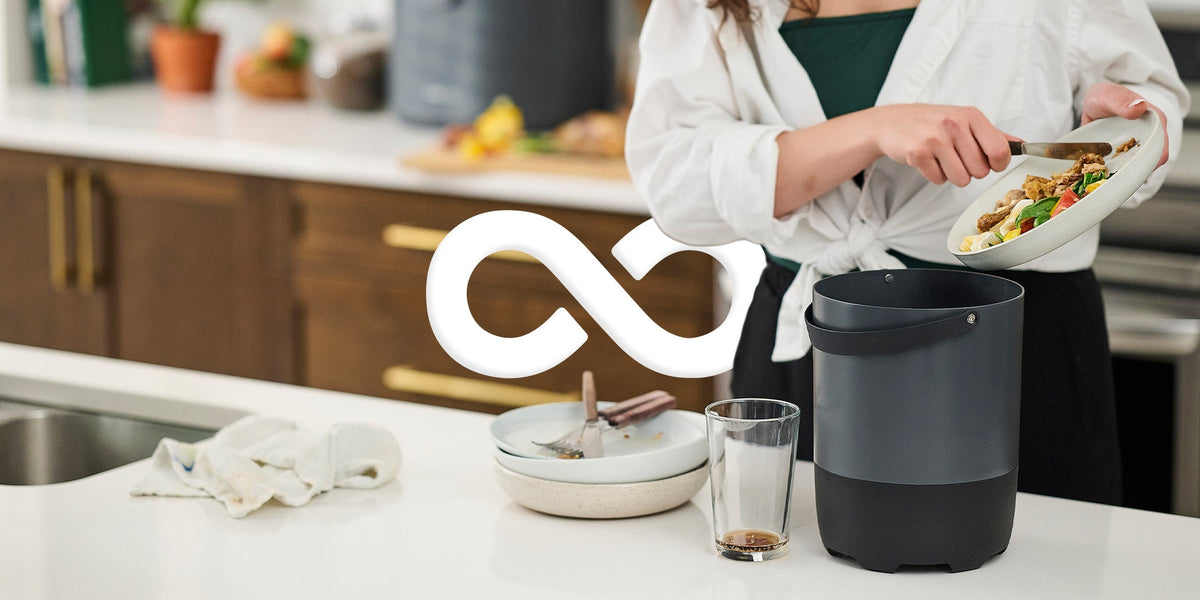
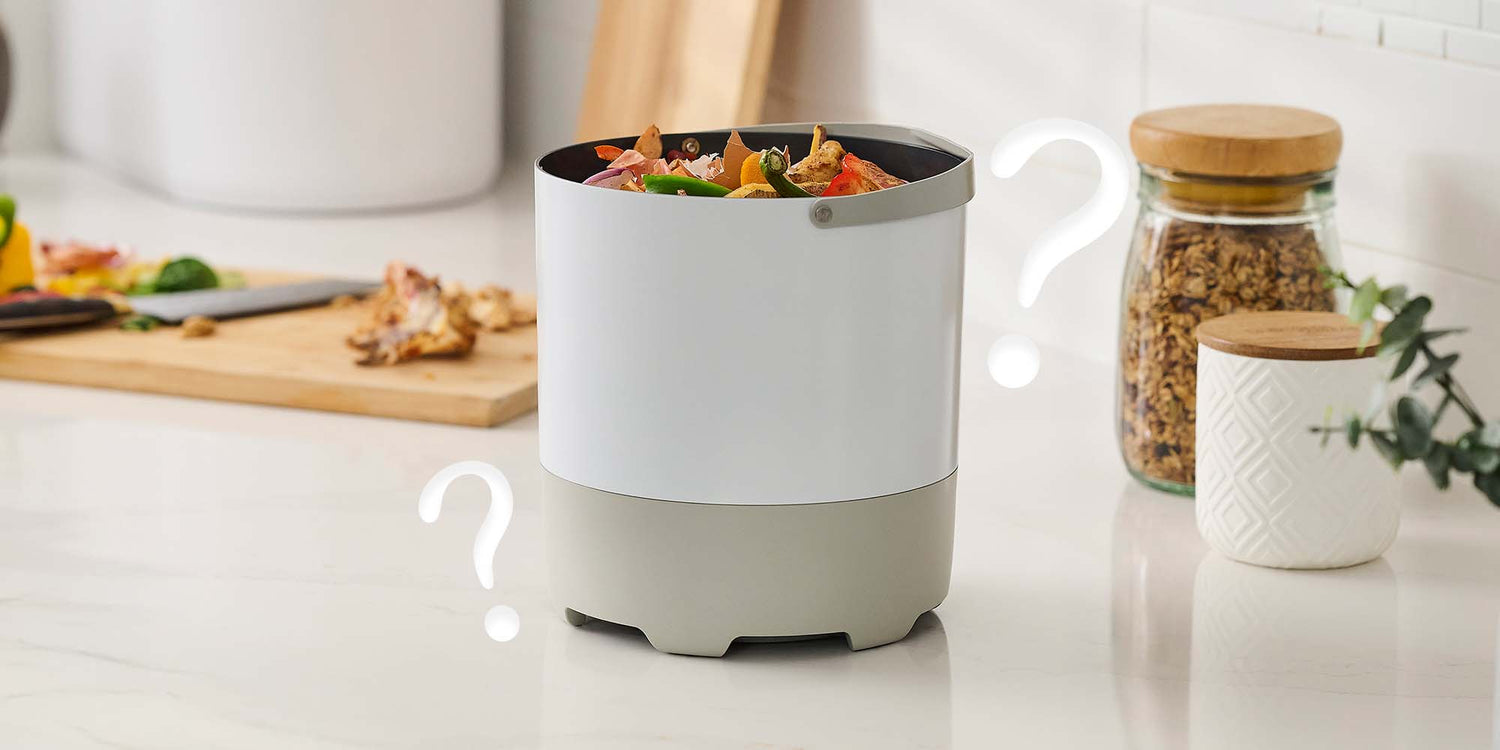
In the kitchen, it looks like peels, leftovers, and coffee grounds. But once food waste enters the waste stream, it becomes a systems issue: hauling, storage, contamination, odors, pests, and greenhouse gas emissions all get involved.
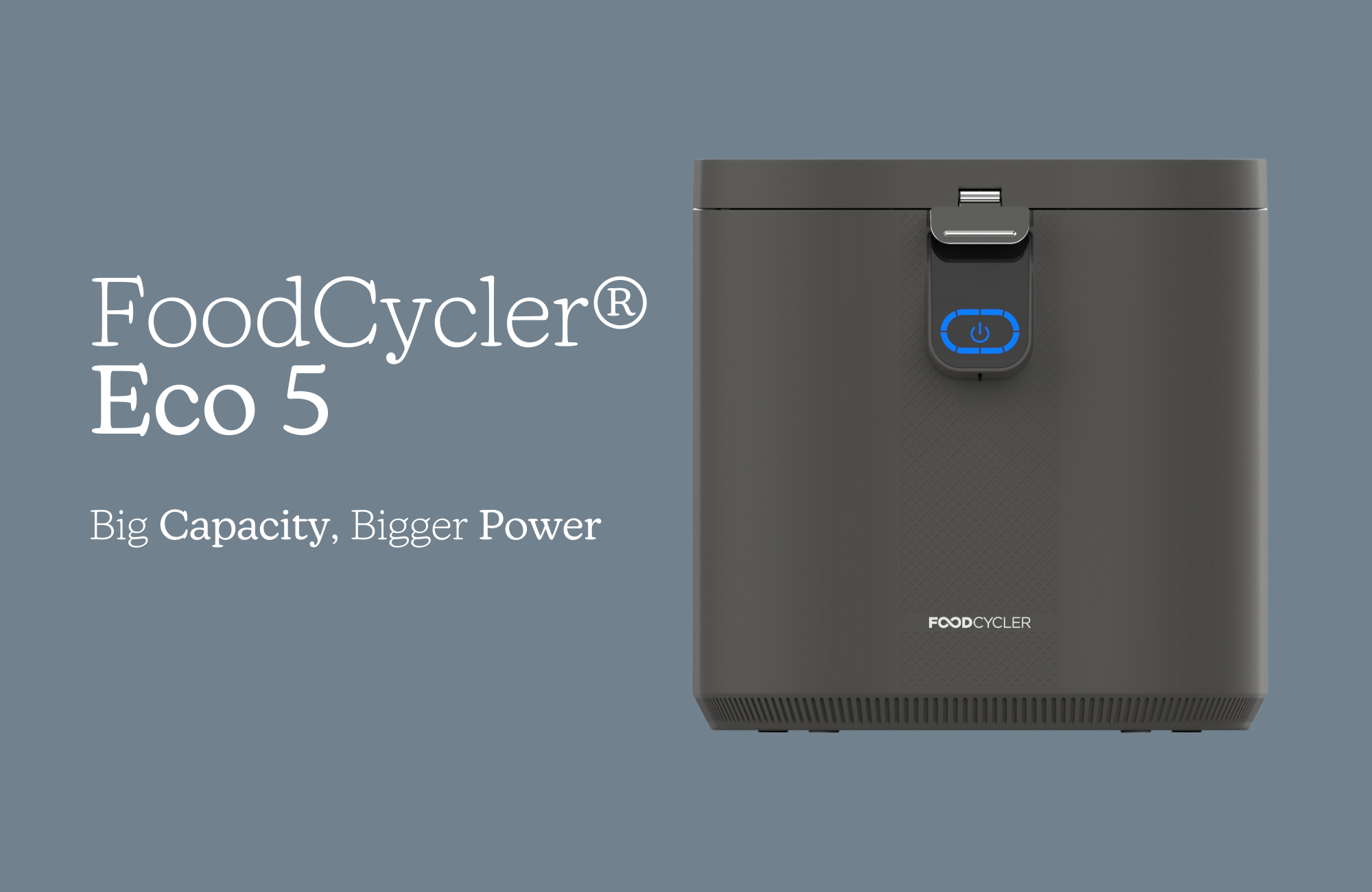
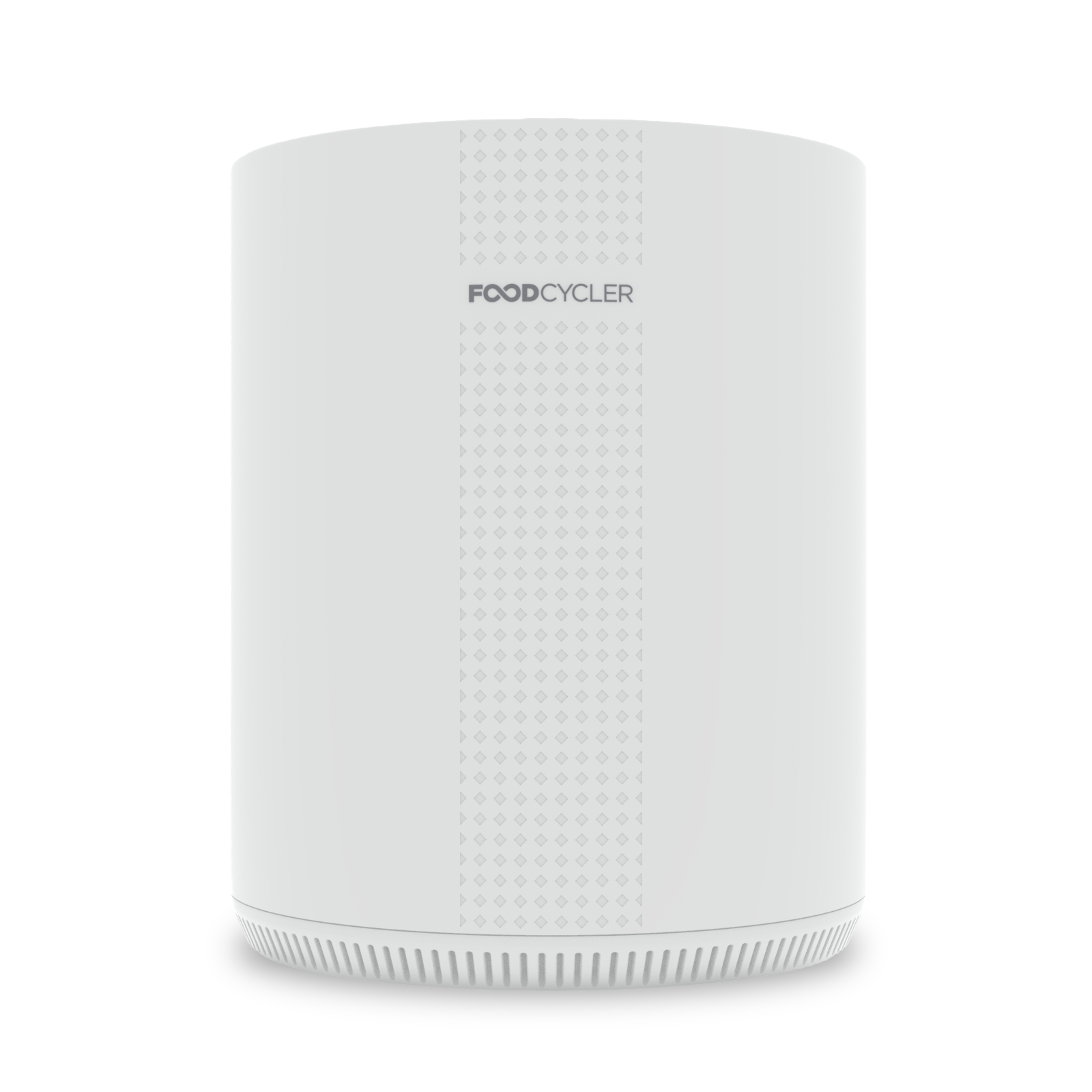
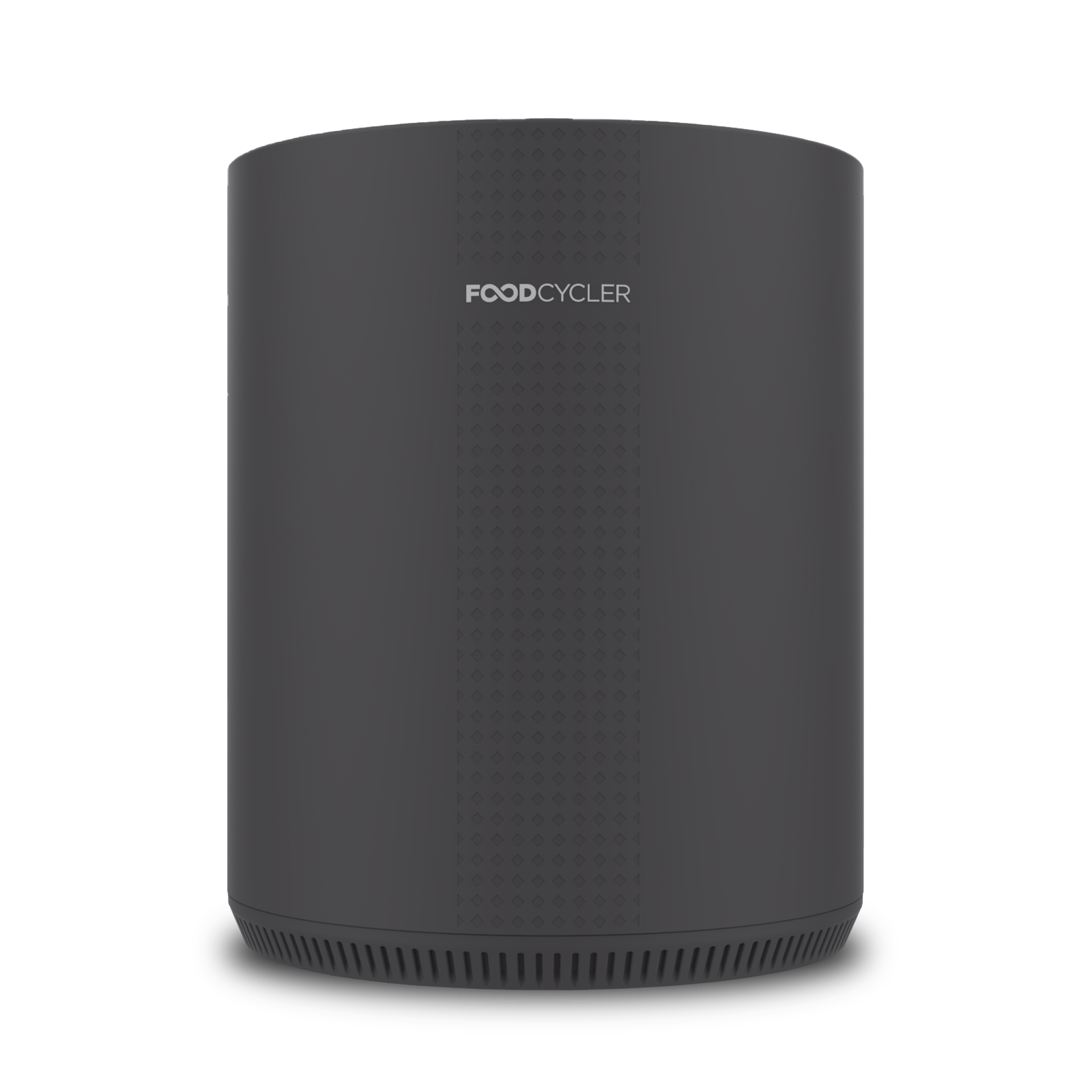
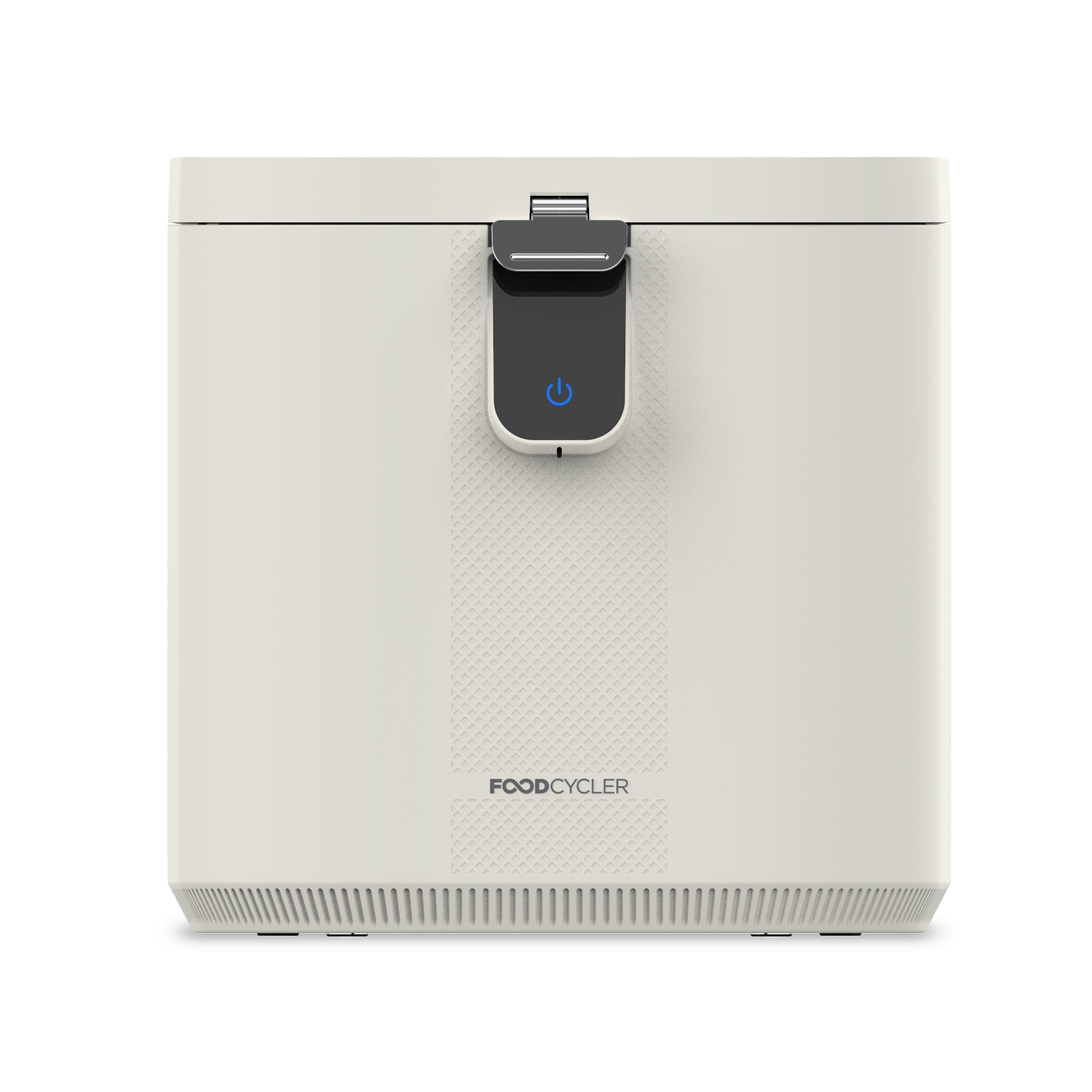
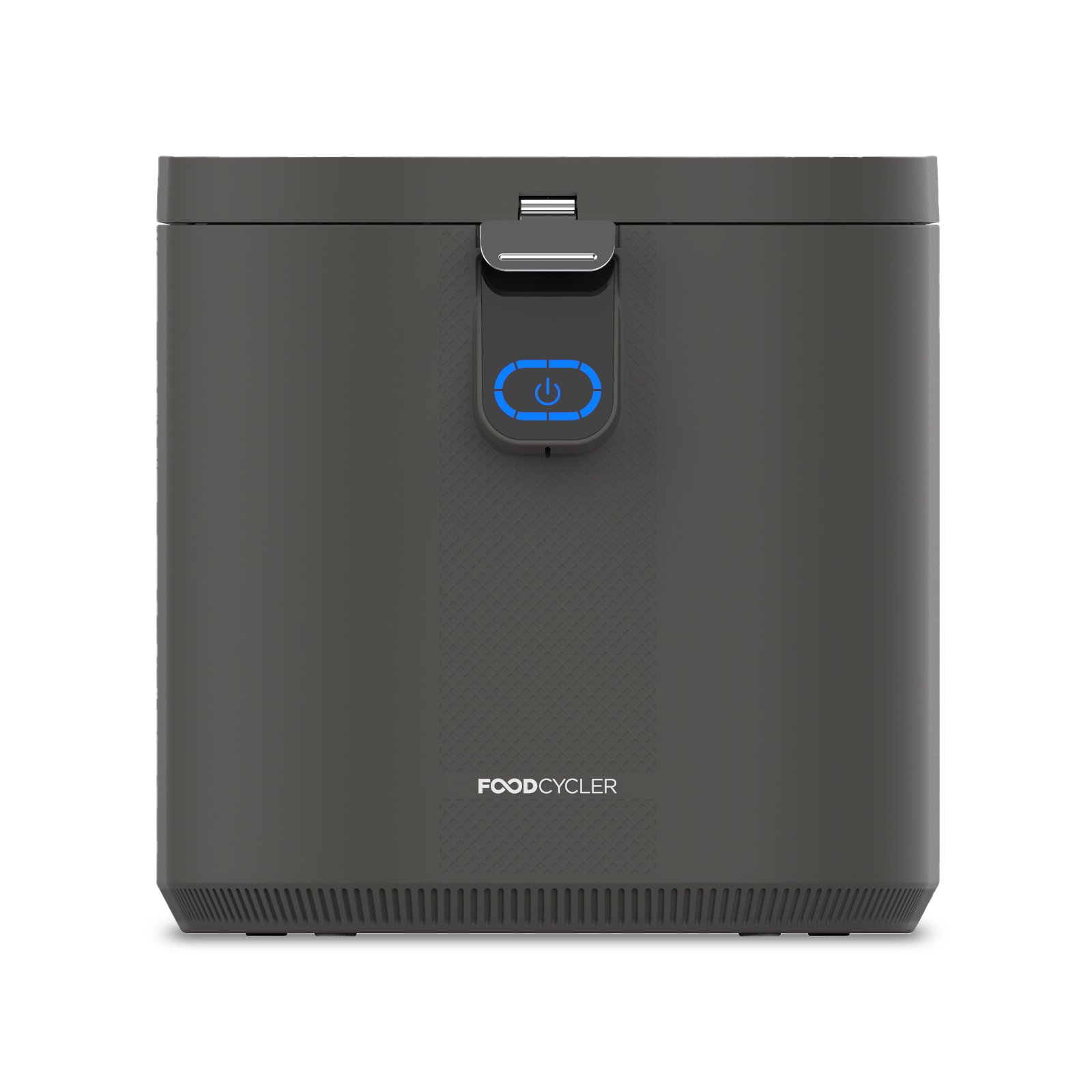
A FoodCycler sits at a different point in that system: it processes food scraps at the source from your kitchen. Instead of waiting for scraps to rot in a bin or break down slowly outdoors, the unit transforms them quickly into a dry, reduced by-product.
Let’s walk through the FoodCycler process, in straightforward terms: what goes in, what comes out, what’s happening inside the unit, how it compares to traditional composting, and the common misconceptions people have about countertop “food waste recycling.”
Key Takeaways
Food waste in landfills often breaks down without oxygen (anaerobically), producing methane, a potent greenhouse gas.
A FoodCycler changes food scraps physically by drying and grinding, turning wet scraps into a shelf-stable by-product called Foodilizer.
Foodilizer is not “finished compost.” It’s best used as a soil amendment (mixed at recommended ratios) or added to compost to continue breaking down.
What you put in matters: balanced inputs (moist and dry) help cycles run more evenly, and some items (like oils/fats, most compostable plastics, and beef bones) are not recommended.
The environmental “why” is simple: keeping organics out of landfill reduces the conditions that create methane in the first place.
Food waste is one of those everyday problems that feels small, until you follow it downstream.
First: What Makes Food Waste “Problematic”?
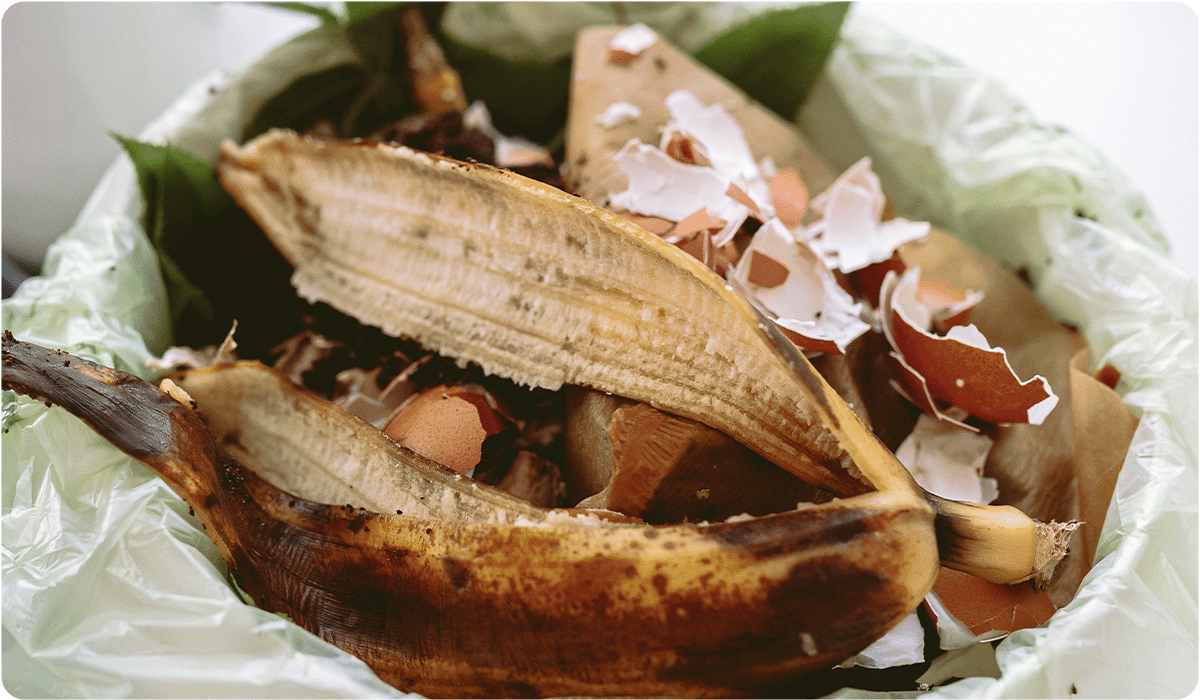
From a science perspective, food scraps are mostly:
-
Water (especially fruits and vegetables)
-
Organic matter (carbohydrates, proteins, fats, and fiber)
-
Minerals (calcium in eggshells, potassium in peels, etc.)
-
Microbes (naturally present bacteria and fungi)
Aerobic vs. anaerobic decomposition (why oxygen matters)
-
Aerobic decomposition (with oxygen) tends to produce carbon dioxide, water vapor, heat, and eventually stable organic material over time (compost).
-
Anaerobic decomposition (without oxygen) can generate methane (CH₄), which is common in landfills where waste is compacted and oxygen becomes limited.
This matters because methane has a substantially higher warming impact than carbon dioxide over a 100-year timeframe. And that’s a serious problem for our climate.
What Happens to Food Waste in a Landfill?
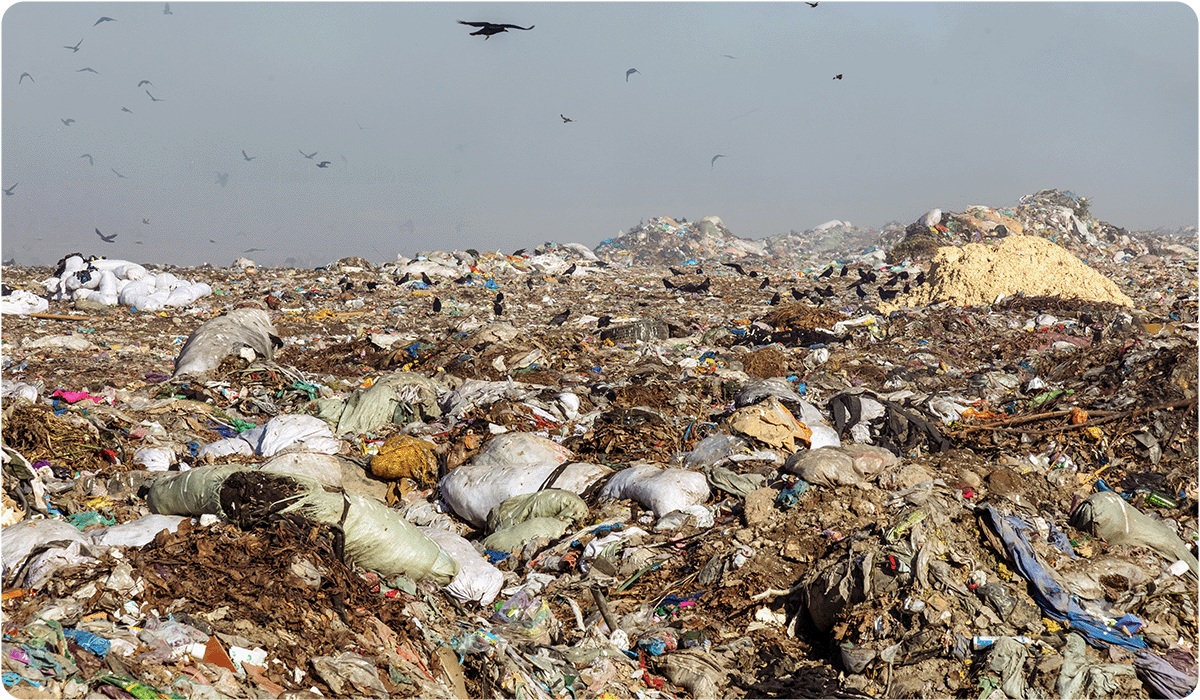
Landfills are engineered to store waste, not to compost it. When food waste is buried and compacted, oxygen levels drop. In these low-oxygen conditions, anaerobic microbes break down organic material and produce methane.
That’s why food waste diversion is so often tied to climate conversations: it’s not just the waste itself, it’s what it becomes when it decomposes without oxygen.
What Happens Inside a FoodCycler?
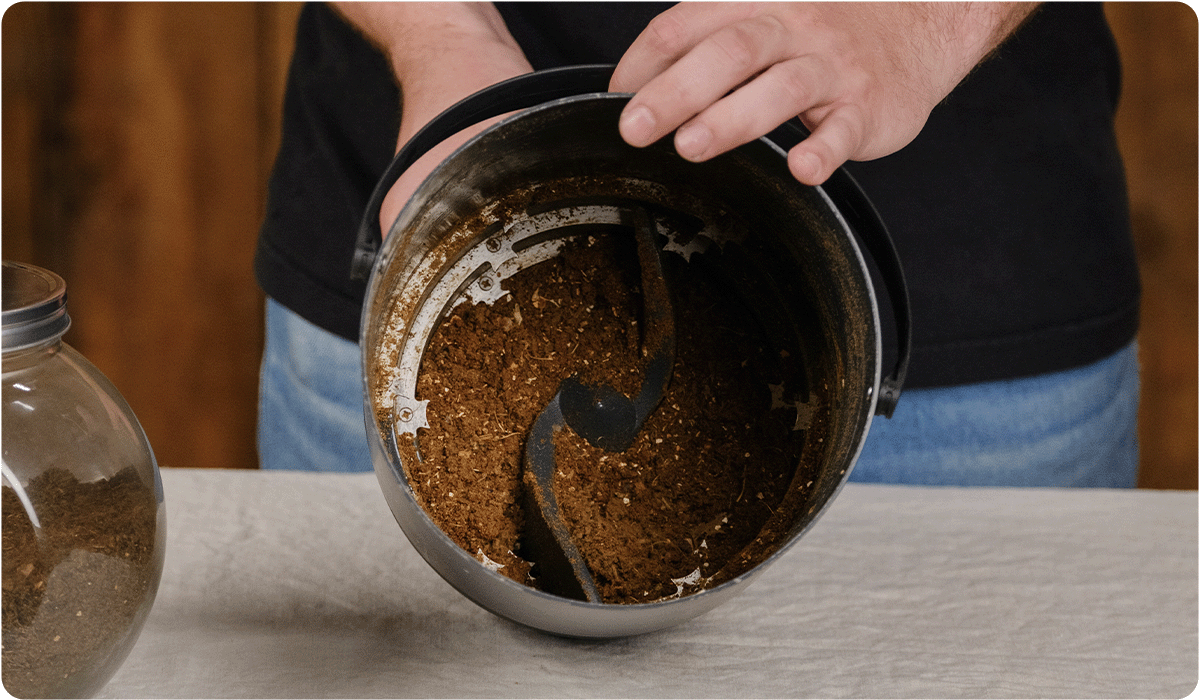
A FoodCycler is best understood as a physical transformation process. It doesn’t “create compost” in the traditional backyard sense. Instead, it changes food waste from:
wet, heavy, odor-prone scraps → dry, reduced, stable particles (Foodilizer)
The core cycle can be summarized as: dry → grind → cool/stabilize.
1) Drying (moisture removal)
Most kitchen scraps are water-heavy. Moisture is one of the biggest reasons food waste becomes unpleasant quickly—smells, leaks, and rapid breakdown all accelerate with moisture.
In the FoodCycler, controlled heat and airflow remove moisture from the scraps.
Removing water has two important effects:
-
It slows microbial activity (microbes need moisture).
-
It reduces weight and volume dramatically.
A simple analogy: fresh produce vs. dried produce. A grape and a raisin contain similar “matter,” but the raisin is far more stable because the water is gone.
2) Grinding (particle size reduction)
After drying, scraps become more brittle and easier to break down mechanically. The unit grinds the dried material into smaller particles.
Reducing particle size helps because it:
-
creates a more uniform material
-
makes the by-product easier to mix into soil
-
increases surface area, which can support further breakdown once it’s added to soil or compost
3) Cooling and stabilization
The final stage cools and stabilizes the material, making it easier to handle and store.
What comes out at the end is a shelf-stable by-product called Foodilizer.
What Comes Out: What Foodilizer Is (and Isn’t)
This is where clarity matters most. You can read our full Foodilizer Gardening Guide here.
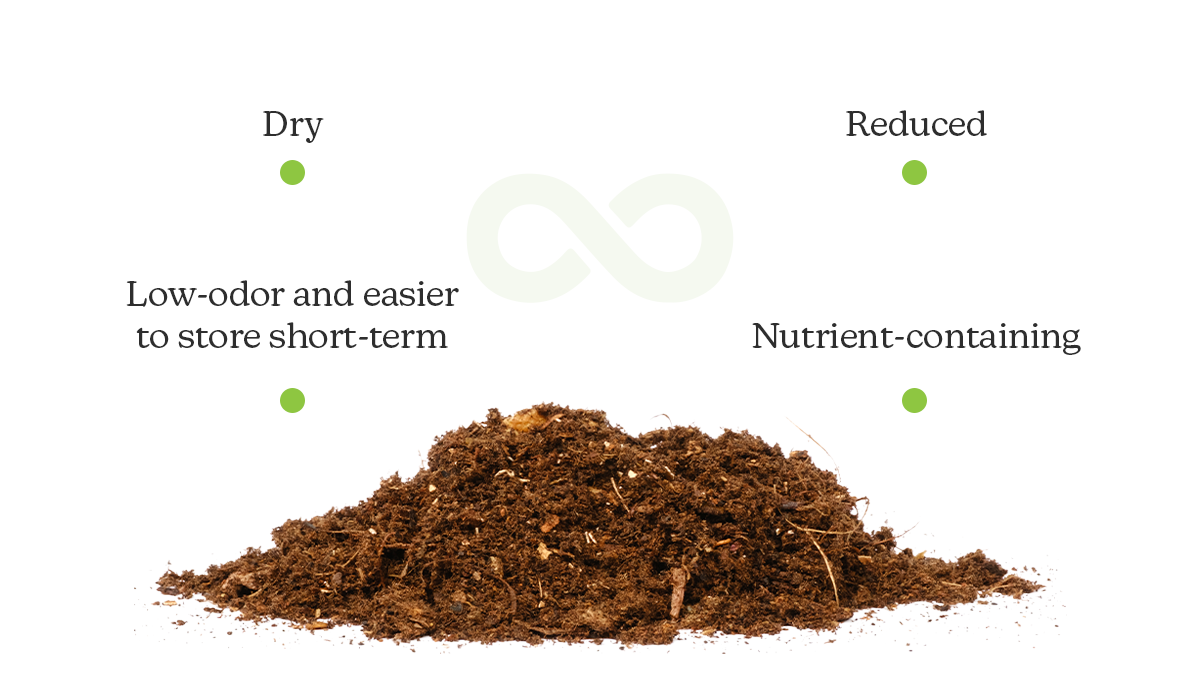
Foodilizer is:
-
Dry (moisture largely removed)
-
Reduced (FoodCycler guidance notes up to 90% volume reduction)
-
Nutrient-containing (nutrients present in the original scraps remain in the material)
-
Low-odor and easier to store short-term than raw scraps because it’s dry
Foodilizer is not:
-
Finished compost (fully matured organic matter created by weeks/months of aerobic microbial activity)
-
A replacement for soil on its own
-
Something to use in large amounts directly on plant roots
A helpful mental model is:
FoodCycler = fast stabilization + volume reduction
Composting = slow biological maturation
They can complement each other, but they’re not the same process.
FoodCycler vs. Traditional Composting
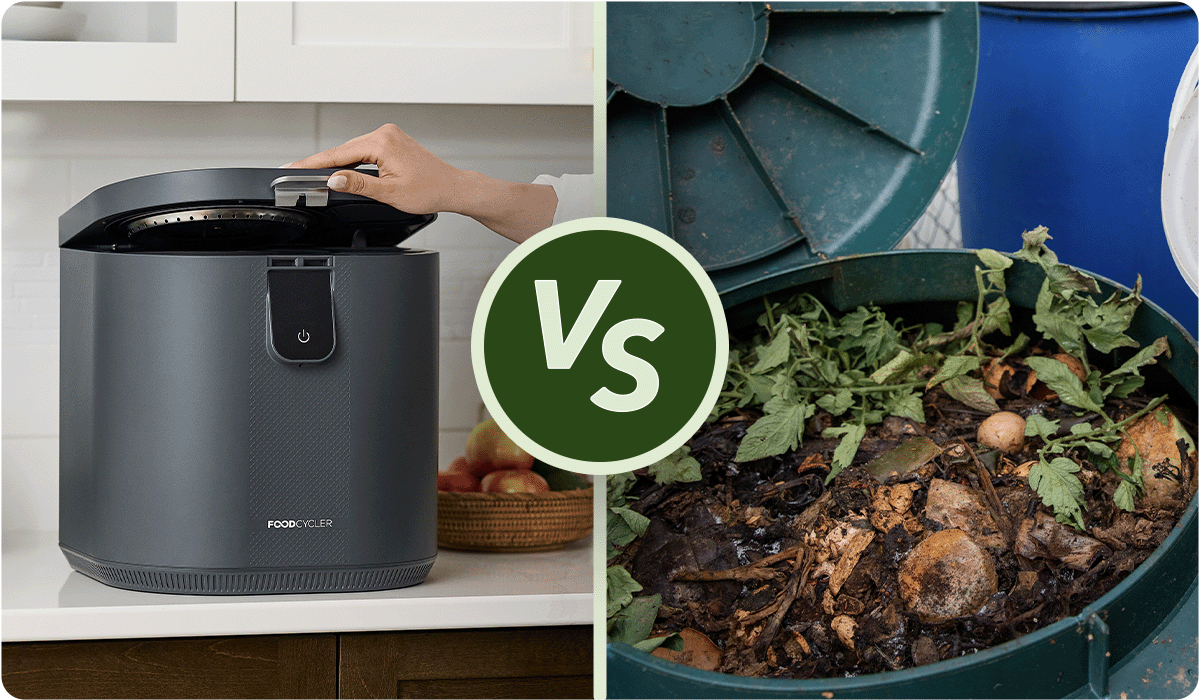
Traditional composting relies on microbes, oxygen, moisture, and time. It’s an outdoor biological process that can be simple or highly managed depending on your setup.
A FoodCycler is different: it’s a countertop preprocessing step that changes the physical state of food waste quickly.
Time
-
FoodCycler: hours (same-day processing, per product guidance)
-
Backyard compost: weeks to months depending on conditions and management
Inputs (what you can put in)
Many backyard composters avoid or restrict meat, fish, dairy, and oily foods because of odors and pests. FoodCycler guidance allows a broader range (including meat/fish and certain bones), with a “not recommended” list to protect the unit and improve outcomes.
Odor and pests
Compost can smell if it’s too wet or imbalanced. It can also attract pests. A FoodCycler reduces odor risk by processing scraps quickly and removing moisture.
Output
-
Compost: a matured, soil-like material after microbial breakdown over time
-
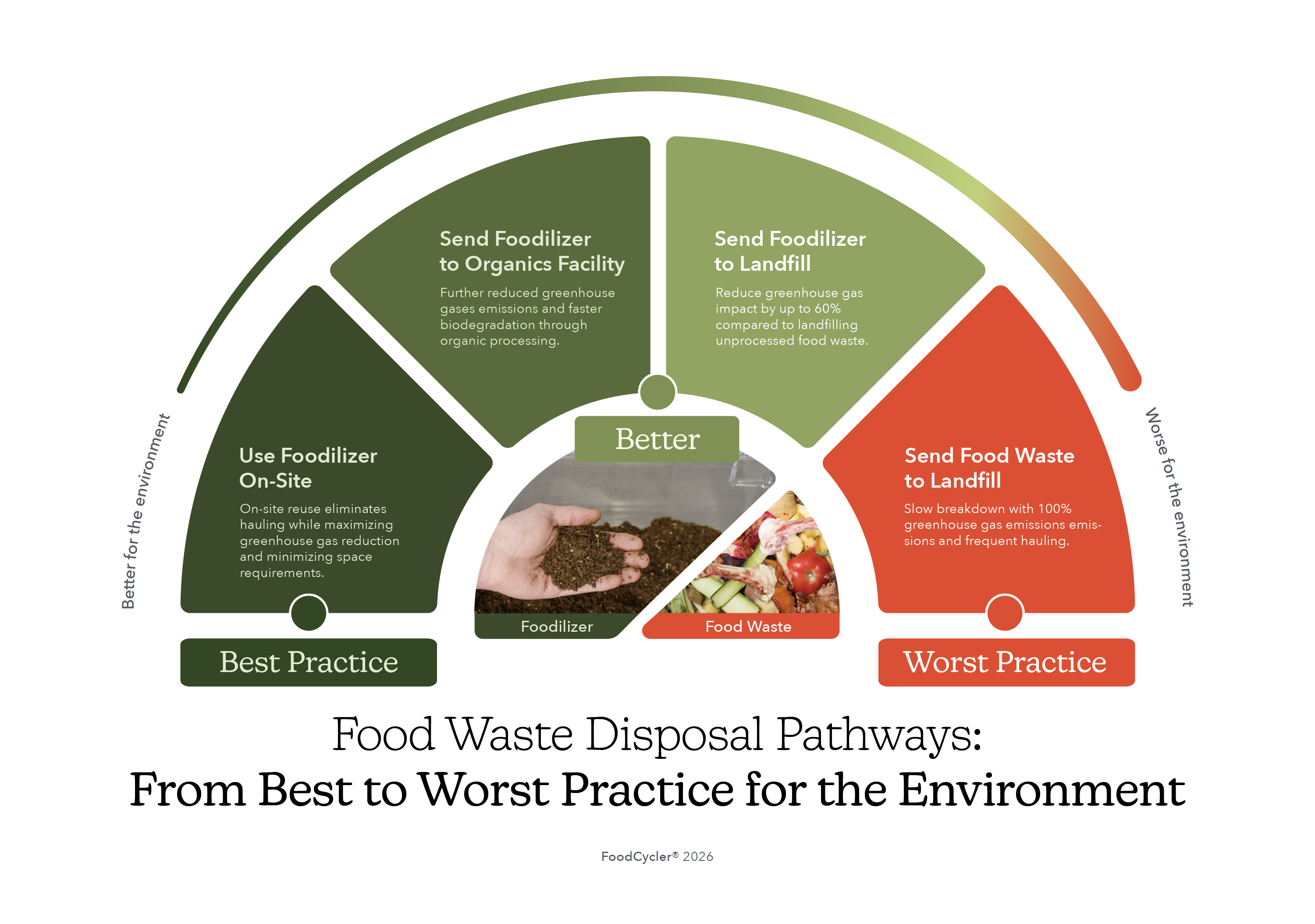
Foodilizer: a dried, reduced by-product that can be mixed into soil (at recommended ratios) or added to compost to continue breaking down
Common Misconceptions
Misconception 1: “It’s just dehydrating food.”
Drying is a major part of the process, but the impact is bigger than the word “dehydrate” suggests. Moisture removal changes the conditions microbes need to rapidly decompose scraps. It also reduces the likelihood of turning your kitchen waste into a wet, anaerobic mass in a bag or bin.
Misconception 2: “If it’s not compost, it’s not useful.”
Not true. Many people don’t have the space, climate, time, or interest required for consistent backyard composting. A stabilized, dry by-product is still meaningful because it’s easier to handle and can be used as a soil amendment or added into compost systems to support ongoing breakdown.
Misconception 3: “Anything labeled ‘compostable’ is fine to put in.”
Many “compostable” plastics are designed for specific industrial composting conditions (heat, humidity, time) and don’t always behave the way people expect in home systems or countertop processors. FoodCycler guidance recommends avoiding most compostable plastics.
What Can I Put in My FoodCycler?
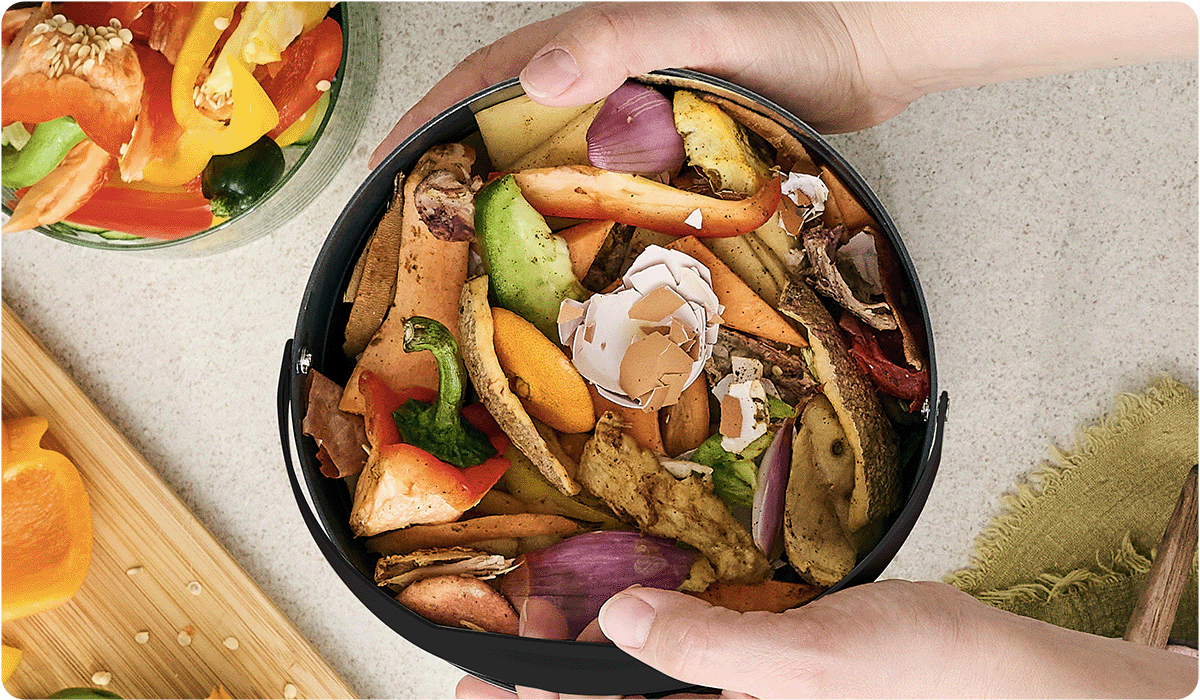
Use the following guidelines to get the best results and protect your unit.
Suitable
-
Veggie & fruit scraps
-
Meat, fish, poultry
-
Poultry & fish bones
-
Coffee grounds & tea leaves (including coffee filters & tea bags)
-
Beans, seeds & legumes
-
Eggshells & seashells
-
Shellfish (including shells)
In small amounts
-
Sauces, dressings & gravies
-
Dairy products
-
Jellies, jams & puddings
-
Starches (including bread, rice, cake, etc.)
-
Pork & lamb bones
-
Hard pits (including peach, apricot, lychee & mango)
Cut up prior
-
Paper towel & tissue
-
Corn cobs & husks
-
Whole vegetables
-
Fibrous plants (including celery, asparagus, parsley, etc.)
Not recommended
-
Cardboard
-
Oils & fats
-
Candy & gum
-
Most “compostable” plastics
-
Beef bones
Why a “Balanced Bucket” Helps
A balanced bucket contains a mix of food types rather than one single category. Combining moist scraps (like fruits and vegetables) with drier items (such as bread or grains) helps the FoodCycler process more efficiently and evenly.
Why? Because different foods behave differently during drying and grinding:
-
very wet scraps can take longer to dry evenly
-
dense starches can clump
-
fibrous scraps may need chopping to avoid tangling
A little variety helps the cycle run more consistently.
How to Use Foodilizer (Best Practices)
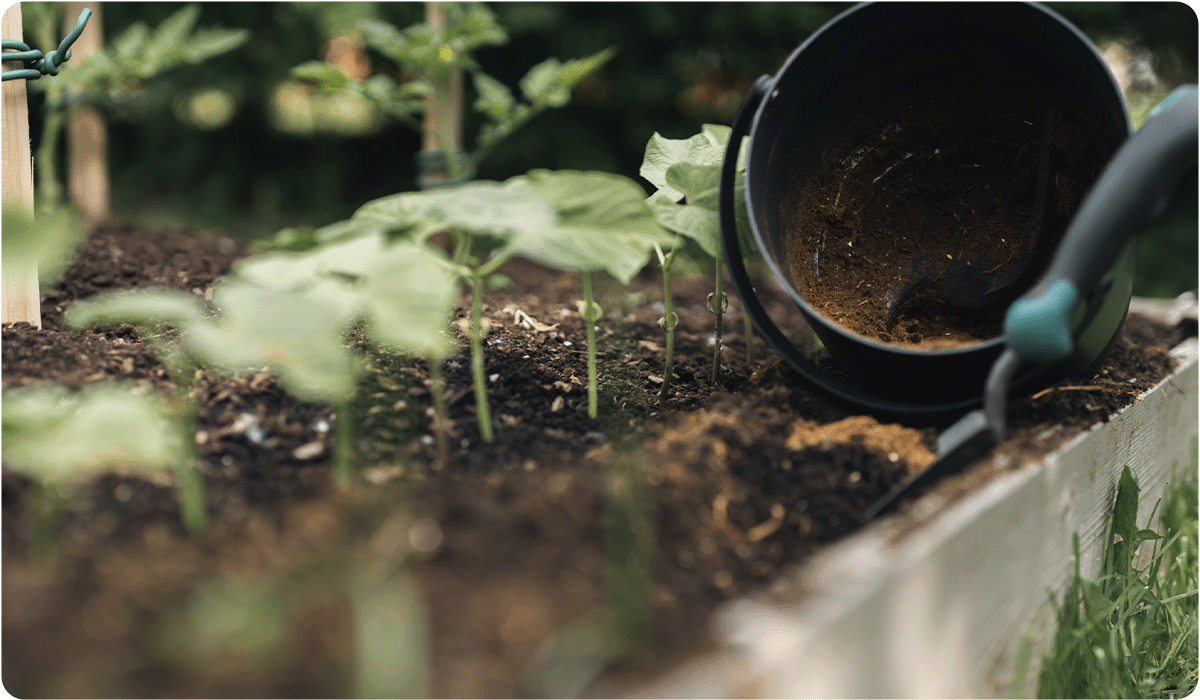
The Foodilizer Gardening Guide outlines several practical options. Here are the most common, with the recommended ratios included.
1) Mix into soil as a soil amendment
-
Minimum recommended ratio: 1:10 (Foodilizer : soil)
-
If your by-product contains a lot of meat and/or dairy: increase to 1:25
-
For best results: mix 4–6 weeks prior to planting (to allow further breakdown and soil integration)
2) Add it to compost
-
Mix into an existing backyard composter (FoodCycler guidance recommends non-tumbling composters)
-
Treat it as a “green” (nitrogen) element and balance with “brown” carbon materials as you normally would
3) Give it to others
Friends who compost or garden can often use it, as can community gardens or local growers.
4) Green bin disposal
If you don’t garden or compost at home, placing Foodilizer in your municipal green bin is a safe and responsible option. Because it’s made entirely from processed food scraps, it remains organic material and is accepted in most curbside organics programs.
Why This Matters
If food waste ends up in landfill, it’s more likely to break down in oxygen-limited conditions, producing methane. Keeping organics out of landfill reduces the conditions that create methane in the first place.
At a household level, many people notice immediate practical benefits too:
-
Less odor in the kitchen waste routine
-
Less mess (no leaking bags of scraps)
-
Less volume and weight in household trash
And if you use Foodilizer in soil or compost, you’re also returning nutrients to a cycle rather than losing them to landfill.
In the end, the FoodCycler is a small appliance with a practical purpose: take something messy and methane-prone in the landfill, and instead turn it into something usable, and easier to manage.
Sources
-
U.S. EPA. “Composting.” (Overview of composting and why diverting organics matters.) epa.gov/sustainable-management-food/composting
-
U.S. EPA. “Quantifying Methane Emissions from Landfilled Food Waste.” (Landfilled food waste and methane.) epa.gov/land-research/quantifying-methane-emissions-landfilled-food-waste
-
U.S. EPA. “Understanding Global Warming Potentials.” epa.gov/ghgemissions/understanding-global-warming-potentials