
Key Takeaways
- Food waste and climate change are directly linked.
- Approximately 10% of the world’s greenhouse gas emissions are caused by food waste.
- Landfilled food waste produces methane, a greenhouse gas 80 times more powerful than carbon dioxide.
- Greenhouse gases trap the sun’s heat in the Earth’s atmosphere, causing the planet’s average temperature to rise.
- Rising temperatures disrupt delicate ecosystems and global weather patterns, leading to significant environmental changes and instability.
Did you know that food waste contributes to global warming as a key producer of greenhouse gases? It’s easy to overlook what happens to those leftovers and scraps after a meal. After all, once food waste is out of sight, it’s also out of mind.
Don’t feel bad! It’s completely understandable why you might not be aware of the link between food waste and climate change. Conversations surrounding global warming tend to be about large-scale factors like burning fossil fuels, deforestation, and industrial processes.
Even at the local level, eco-conscious folks seeking ways to reduce their carbon footprint typically prioritize energy efficiency and resource conservation, not realizing that food waste accounts for up to 10% of global greenhouse emissions.
The good news is that there are ways to manage food waste easily and efficiently at home. Once you understand the problem, you can be part of the solution! Here’s everything you need to know about the connection between food waste and climate change.
Frequently Asked Questions
How does food waste contribute to climate change?
- Food waste eventually ends up in a landfill, where it breaks down and produces methane, a harmful greenhouse gas 80x more potent than carbon dioxide.
- Methane (and other greenhouse gases) trap the sun’s heat in the Earth’s atmosphere, causing the planet's average temperature to rise.
- Higher average temperatures cause environmental instability as delicate ecosystems and global weather patterns are disrupted.
How does reducing food waste contribute to a lower carbon footprint?
Reducing and recycling food waste diverts organic materials that produce greenhouse gases away from landfills.
How much does our food contribute to climate change?
In the United States, food waste and climate change statistics are especially daunting. Homes are the largest source of food waste (48%). The average American throws away approximately 257 pounds of food every year, wasting around 42.8 million tons of food annually.
Is climate change getting worse?
Yes, according to the United Nations, the Earth is warming at a faster rate than at any point in recorded history.
Can we stop climate change?
According to NASA, we could slow climate change by no longer emitting greenhouse gases. However, temperatures would still be elevated for many centuries. Although some damage is irreversible, it’s not too late to prevent or at least mitigate the worst effects.

The Food Waste and Climate Change Connection

Why does food waste contribute to climate change? We explained the basics, but it’s important that you understand the full extent of how food waste and global warming are linked.
Here’s what the cycle of greenhouse gases causing global warming looks like:
- Sunlight Warms the Earth: The sun’s solar radiation passes through the Earth’s atmosphere and warms the surface of the planet. This is called shortwave radiation and is, obviously, vital to our survival.
- Heat Escapes to Space: The warmed planet radiates the energy back outwards to space in the form of thermal heat. This process is called longwave infrared radiation.
- Greenhouse Gases Trap the Heat: Here’s the tie-in with food waste and climate change. Methane emitted by decomposing waste forms a blanket-like barrier around the Earth, which prevents the thermal heat from escaping.
- The Blanket Barrier Thickens: Greenhouse gases keep building up, making it increasingly difficult for trapped heat to escape. Meanwhile, greenhouse gas emissions continue accumulating in the atmosphere, causing a compounding effect.
- Average Global Temperatures Rise: The trapped heat causes the average global temperatures to increase.
- High Temperatures Disrupt the Planet: Rising temperatures disrupt the delicate balance of ecosystems and weather systems, causing a myriad of devastating, large-scale environmental events.
Wasting Food Wastes Greenhouse Gases
The link between food waste and climate change starts long before you ever open the package and chow down. How does food waste contribute to climate change? Wasting food wastes the resources and greenhouse gases that were used to produce the food in the first place.
Embodied carbon is a term that refers to the total greenhouse gas emissions generated throughout a product’s lifecycle. In the context of food waste and global warming, you must consider the food’s journey from the farm to your plate (or bin).
Recognizing the Impact of Food’s Lifecycle

To help you understand what embodied carbon looks like, let's use agriculture as an example. Agriculture is the second-largest source of pollution that causes global warming, trailing the burning of fossil fuels.
When analyzing the link between food waste and climate change, it’s important to remember that greenhouse gases were already emitted to make the food available to you. Here are a few examples of how:
- Manufacturing the synthetic fertilizer used for industrial farming causes around 2% of global carbon dioxide emissions.
- Transporting, storing, processing, and packaging food accounts for roughly 5-10% of global greenhouse gas emissions.
From gas-powered tractors to deforestation, there are countless other examples of how food production directly causes greenhouse gas emissions.
When you throw away a half-eaten sandwich, you’re not just wasting the ingredients. You’re wasting the greenhouse gases that were used along the way.
Consider the Total Carbon Footprint

To visualize this side of food waste and climate change, imagine an apple that has fallen from a tree. It will eventually decompose and release methane into the atmosphere, but only a very tiny amount in the grand scheme of things.
On the other hand, an apple that rots on your countertop and gets thrown away has a much larger total carbon footprint. All of the energy and greenhouse gases used throughout the entire journey from farm to your home are wasted before the apple even reaches the landfill.
Join the FoodCycler® Movement
Why does food waste contribute to climate change? Because it doesn’t get recycled! Together, we can put an end to food waste and climate change.
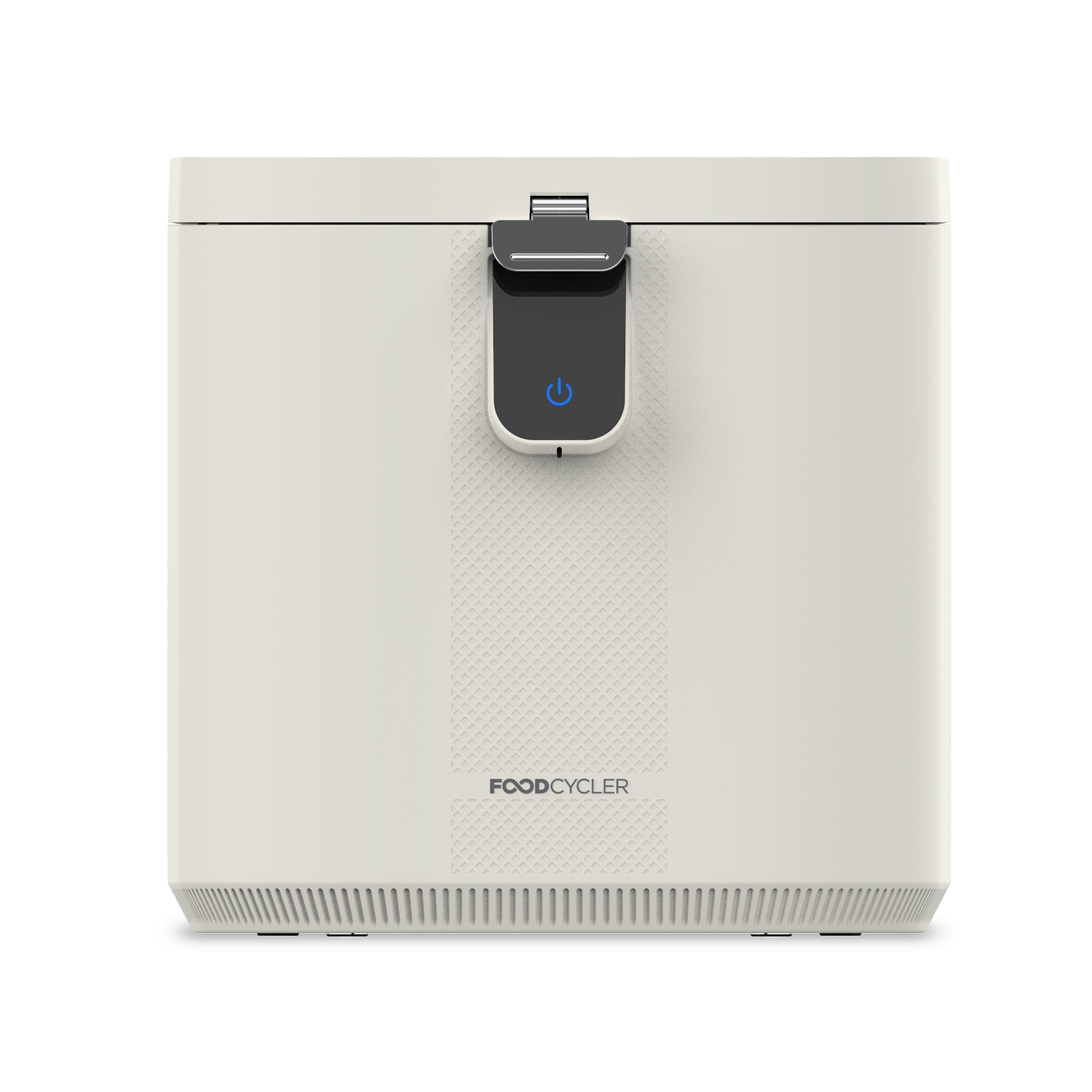
FoodCycler is a premium, indoor-use kitchen recycler that reduces the volume of food waste by up to 90% per cycle and transforms it into a nutrient-rich soil amendment we call Foodilizer®.
With our premium kitchen appliance, you can be part of a growing movement of mindful Earth citizens who are ready to make much-needed changes to food waste and global warming.