Ottawa, Ontario | Fine dining | 100 seats
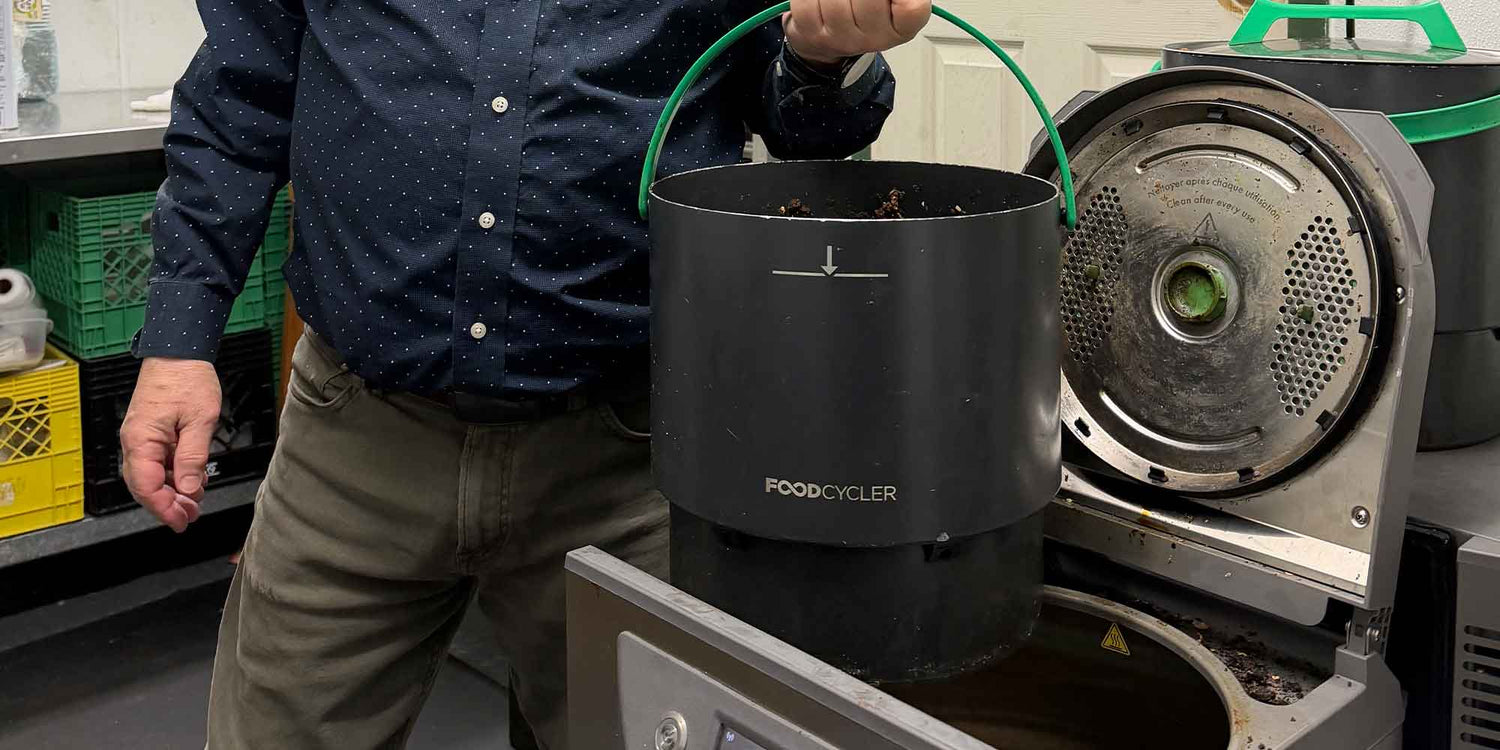
FoodCycler FC-75 cut organics hauling demand in half, saved about $360/month, and cleaned up a gross job staff hated. Petit Bill’s is the kind of operator other small fine dining restaurants trust - owner-led, sustainability-minded, space-constrained, and already paying for organics hauling.
$360/mo
Reported hauling savings
$4,320/yr
Annualized savings
50%
Fewer 64-gal organics totes per week
25,196 L
Less raw organics volume per year
Before FC-75
|
After FC-75
|
"The FC-75 enables us to process our food waste on site and cut our organics storage space and hauling costs by more than half. Our restaurant and the vicinity around it is so much cleaner now without having raw organics in the area."
— Randy Fitzpatrick, Owner, Petit Bill's Bistro
How the site uses the FC-75

One Machine. In the Basement. Handling 85% of All Food Waste.
- Unit sits in the basement, close to where waste is generated.
- Dishwasher runs roughly 4 drawers/day — two during the day and two before close.
- Mostly prep waste; about 35–40% post-consumer.
- The FoodCycler FC-75 handles about 85% of total food waste.
Three Reasons This Story Resonates
- ROI is easy to understand for operators already paying for organics hauling.
- The cleanliness story is visceral: less smell, less mess, fewer pests.
- Staff prefer running a machine over carrying wet waste to a bin.
Best-fit customer profile
- Full-service restaurant, 100 seats or less
- Makes food from scratch and creates meaningful prep waste
- Already paying for organics hauling or fighting for bin space
- Owner-led operator who values cleanliness and guest experience
Paid Off in About 27 Months. Saving Money Every Month After.
|
|
|
|
|
|
|
0 months Initial investment |
27 months Machine paid off |
Onward Pure savings |
|
$4,320 per year in reported hauling savings |
~27 mo simple payback period, excluding power, service, and currency adjustments |
Beyond the Bill: The Environmental Numbers
Two fewer 64-gallon toters per week adds up to a meaningful environmental footprint reduction when you look at the full picture.
Two fewer 64-gal toters per week equals about 15,600 lb (7.1 metric tonnes) per year of raw food-waste collection capacity avoided, using EPA's 150 lb per 64-gal toter estimate.
If that same quantity were landfilled instead of composted, EPA WARM factors imply about 5.1 MTCO2e/year in modelled emissions difference.
This estimate should be used as directional guidance only unless you have measured weight and a confirmed disposal destination.
We sat with Petit Bills owner Randy to get his take on the FC-75